Avian Jet Lag Reveals Insights for Autonomous Systems
A two-decade tracking study reveals that Manx shearwaters experience a natural form of jet lag when flying across longitudes, subtly skewing their solar compass. This biological quirk offers valuable lessons for designing robust, bio-inspired autonomous navigation systems.

AI-assisted article, edited by Prashant Gupta · How we work
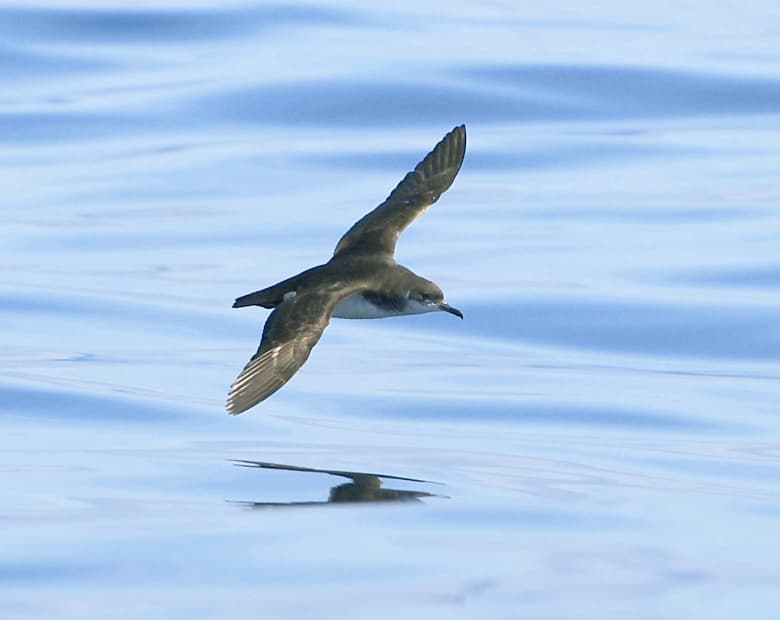
- Manx shearwaters experience measurable jet lag that skews their solar compass during long-distance foraging flights.
- The birds compensate for minor navigational drift by continuously cross-referencing their position using a map sense.
- Insights from avian navigation offer valuable design patterns for robust, bio-inspired autonomous navigation systems.
Overview
Crossing multiple time zones typically induces a familiar disorientation in humans, where internal biological rhythms fail to match local solar time. Recent ornithological research demonstrates that this physiological challenge is not unique to our species. Manx shearwaters—pelagic seabirds native to the North Atlantic—routinely induce mild jet lag upon themselves during extensive foraging journeys. Because these birds rely heavily on a solar compass to navigate vast expanses of open ocean, this temporal desynchronization leaves a distinct, measurable trace on their directional heading.
The Mechanics of an Avian Solar Compass
Manx shearwaters undertake massive daily excursions from their coastal nesting colonies, sometimes traveling upwards of 1,000 kilometers over open water. To successfully return to their burrows, these animals utilize a dual-component navigation framework: a map sense (potentially mediated by olfactory cues) to determine their global position, and a celestial compass driven by the Sun to maintain a straight trajectory.
However, relying on a solar compass presents a mathematical complication. The Sun's apparent position shifts continuously across the sky throughout the day. An animal traveling south at sunrise must adjust its heading at a 90-degree angle relative to the Sun, whereas a midday trajectory requires flying directly toward it. Effective execution of this strategy demands an internal chronometer that tracks local time accurately. While birds possess an innate biological clock, it is not instantaneously adjusted across geographical coordinates.
Quantifying Temporal Drift Through Long-Term Tracking
To capture this subtle phenomenon, researchers analyzed an extensive database compiled over twenty years, consisting of 3,688 foraging trips tracked via lightweight GPS units attached to 1,045 individual birds. By pinpointing the exact location where a shearwater last observed sunrise—the moment its internal clock was last synchronized—the research team calculated the theoretical angular deviation caused by longitudinal displacement.
The findings indicated that birds flying eastward veered clockwise off course, while those traveling westward drifted counterclockwise. Although the time shifts were minimal—averaging between 10 to 60 minutes—the resulting navigational bias closely matched predictive models of solar compass errors. Alternative explanations, such as crosswinds or geomagnetic interference, failed to account for the observed directional skews.
Implications for Bio-Inspired Autonomous Navigation
Despite a maximum angular error of roughly 15 degrees, the biological cost remains low because the birds continuously cross-reference their position using their map sense, adding negligible distance to their overall journey. Interestingly, even when following familiar coastlines, the subjects exhibited slight lateral drift, pointing toward a dual-system architecture where compass and landmark navigation operate in parallel.
This balance between internal timekeeping and environmental cues offers profound implications for engineers designing bio-inspired autonomous navigation systems. Understanding how biological agents compensate for temporal drift and sensor desynchronization can inform more resilient algorithms for autonomous aerial and marine robotics operating over long ranges.
Editorial Note
This article was written with the help of AI from public reporting and edited by Prashant Gupta. "Aidenza's Take" is AI-generated analysis, not a personal opinion. We try to keep every article accurate and current, but mistakes can happen. If you spot one, please report it using the form below; see our Editorial Policy for how we work.
Found an issue with this article?
We strive to keep our content accurate and up to date. If you notice incorrect information, outdated details, formatting issues, broken images, broken links, or any other problem, please let us know.
Frequently Asked Questions
How do Manx shearwaters navigate across the ocean?
They combine a map sense (likely based on olfactory cues) for position with a solar compass to maintain direction, utilizing their internal biological clock to adjust for the Sun's movement.
What causes jet lag in these seabirds?
Rapid movement across lines of longitude outpaces the bird's internal clock, which only recalibrates at dusk and dawn, causing a temporal mismatch with local solar time.
How does this research impact technology?
By studying how biological organisms handle temporal drift and multi-modal navigation, systems architects can design more resilient, bio-inspired autonomous navigation algorithms.
Related Intelligence

The FDA, Tavneos, and the Challenge of Drug Approvals
The US Food and Drug Administration is fighting to revoke its approval of the vasculitis drug Tavneos after discovering evidence of manipulated clinical trial data. This ongoing dispute highlights deep vulnerabilities in pharmaceutical oversight, corporate incentives, and the oversight of small biotechnology firms.

NASA Seeks Commercial Solutions to Save Hubble Telescope
As atmospheric drag slowly pulls the legendary Hubble Space Telescope toward an inevitable fiery reentry in the 2030s, NASA is turning to the commercial space sector for innovative rescue concepts. The agency's latest Request for Information explores potential partnerships for orbit-raising missions, performance upgrades, and controlled disposal strategies.

Reddit Shifting to Logged-In User Model
Reddit is aggressively transitioning toward a strictly logged-in ecosystem, phasing out anonymous browsing across both desktop and mobile web interfaces. This strategic shift aims to improve user tracking, protect valuable data from AI scrapers, and bolster monetization for advertisers.