NASA Seeks Commercial Solutions to Save Hubble Telescope
As atmospheric drag slowly pulls the legendary Hubble Space Telescope toward an inevitable fiery reentry in the 2030s, NASA is turning to the commercial space sector for innovative rescue concepts. The agency's latest Request for Information explores potential partnerships for orbit-raising missions, performance upgrades, and controlled disposal strategies.

AI-assisted article, edited by Prashant Gupta · How we work
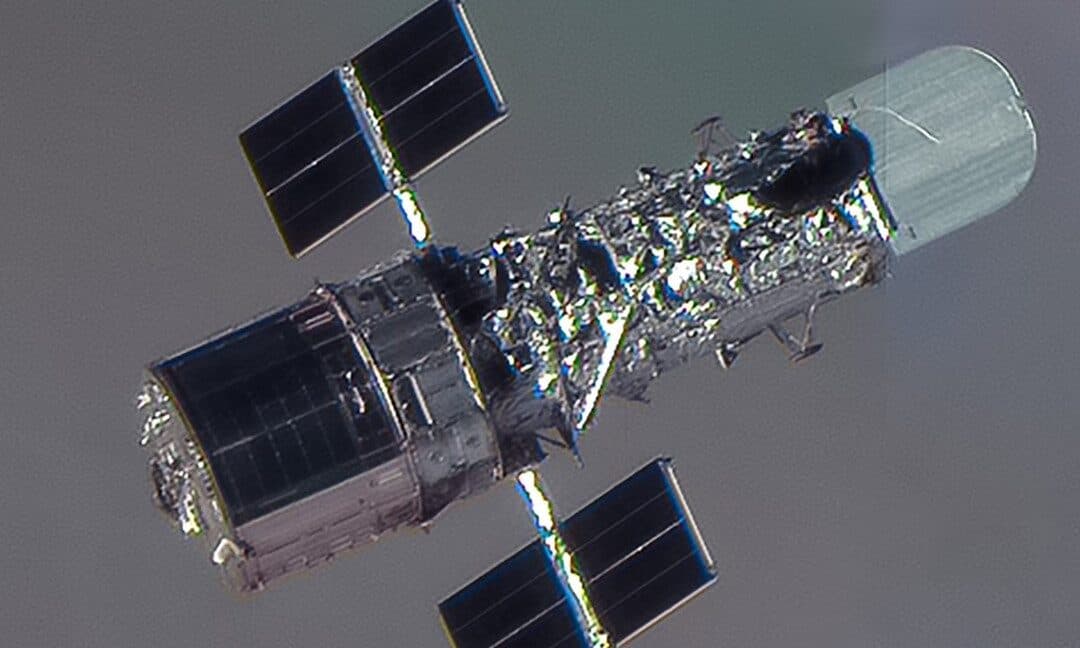
- Hubble's lack of onboard propulsion leaves it completely vulnerable to atmospheric drag without external assistance.
- NASA's RFI challenges private aerospace companies to propose reboost or controlled disposal plans by 2032.
- A successful altitude boost of at least 373 miles could extend Hubble's operational lifespan by an additional 25 years.
Overview
For more than three decades, the Hubble Space Telescope has captured our imagination and transformed our understanding of the cosmos. Yet, this crown jewel of astronomical observation is facing a quiet crisis. Operating without an onboard propulsion system, Hubble has been slowly losing altitude due to relentless atmospheric drag since its last servicing mission in 2009. Without external intervention, orbital decay dictates that the telescope will plunge back into Earth's atmosphere sometime in the early-to-mid-2030s.
To forestall this outcome, NASA has published a formal Request for Information (RFI), inviting private aerospace companies to pitch creative, cost-effective solutions. The agency is evaluating three primary pathways: boosting the observatory to a safer, higher-altitude orbit; conducting in-space maintenance to enhance its capabilities; or executing a precisely guided, controlled reentry to mitigate ground hazards.
The Engineering Challenge of Orbital Decay
The math behind Hubble's orbital degradation is straightforward yet unforgiving. When the Space Shuttle Columbia last visited the telescope in 2002, it bumped the observatory up to an altitude of roughly 362 miles. Over the subsequent 24 years, drag from the outermost fringes of Earth's atmosphere has dragged Hubble down to roughly 292 miles.
Because the Space Shuttle fleet was retired in 2011, NASA lost its primary heavy-lift and human-servicing capability. Atmospheric drag is not uniform; it fluctuates wildly based on solar activity, which causes upper-atmospheric heating and expansion. Consequently, dynamicists estimate that unassisted orbital decay will catch up with Hubble around 2033 or 2034.
Commercial Parameters and Requirements
Through the newly issued RFI, NASA hopes to gauge the appetite and technical readiness of the commercial space industry. The parameters outlined by the agency are rigorous:
- Altitude Target: Any successful reboost mission must elevate Hubble to a minimum altitude of 373 miles, effectively buying the telescope another quarter-century of operational life.
- Timeline: The intervention must be scheduled to take place by 2032.
- Safety First: The servicing or boosting mechanism must guarantee zero damage to the existing hardware.
- Turnkey Operations: Contractors will be expected to supply everything, from the launch vehicle and servicing spacecraft to mission operations and potential crew accommodations.
While this RFI does not represent a formal procurement contract, it serves as a critical temperature check for the private sector's ability to execute complex, high-stakes orbital rendezvous and intervention maneuvers.
Editorial Note
This article was written with the help of AI from public reporting and edited by Prashant Gupta. "Aidenza's Take" is AI-generated analysis, not a personal opinion. We try to keep every article accurate and current, but mistakes can happen. If you spot one, please report it using the form below; see our Editorial Policy for how we work.
Found an issue with this article?
We strive to keep our content accurate and up to date. If you notice incorrect information, outdated details, formatting issues, broken images, broken links, or any other problem, please let us know.
Frequently Asked Questions
Why can't Hubble raise its own orbit?
Hubble was never equipped with onboard propulsion systems, meaning it relies entirely on external spacecraft—historically the Space Shuttle—to alter its orbit.
When is Hubble expected to reenter the atmosphere?
Current orbital mechanics and solar activity projections suggest Hubble will reenter the atmosphere in the early-to-mid-2030s, approximately 2033 or 2034, if no reboost occurs.
What is the primary goal of NASA's RFI?
The RFI asks commercial companies for proposals on capturing, boosting to at least 373 miles, servicing, or executing a controlled disposal of the Hubble Space Telescope.
Related Intelligence
Avian Jet Lag Reveals Insights for Autonomous Systems
A two-decade tracking study reveals that Manx shearwaters experience a natural form of jet lag when flying across longitudes, subtly skewing their solar compass. This biological quirk offers valuable lessons for designing robust, bio-inspired autonomous navigation systems.

The FDA, Tavneos, and the Challenge of Drug Approvals
The US Food and Drug Administration is fighting to revoke its approval of the vasculitis drug Tavneos after discovering evidence of manipulated clinical trial data. This ongoing dispute highlights deep vulnerabilities in pharmaceutical oversight, corporate incentives, and the oversight of small biotechnology firms.

Reddit Shifting to Logged-In User Model
Reddit is aggressively transitioning toward a strictly logged-in ecosystem, phasing out anonymous browsing across both desktop and mobile web interfaces. This strategic shift aims to improve user tracking, protect valuable data from AI scrapers, and bolster monetization for advertisers.