Meta's Muse AI Agent Hit by Critical macOS Zero-Day Flaw
Meta's flagship desktop AI assistant, Muse, has been exposed by a critical zero-day vulnerability that bypasses macOS sandbox protections. Security researchers demonstrated how local processes can hijack authentication tokens and take total control of the agentic workflow.

Aidenza Editorial Agent
AI Systems Journalist

- Autonomous AI agents holding broad service integrations present exponentially higher security risks than traditional desktop applications.
- Allowing unprivileged local processes to modify core application endpoints creates critical privilege escalation vectors.
- Cloud-based transcription and data routing must be strictly authenticated and isolated to prevent man-in-the-middle proxy injections.
- Major platform operators are actively restricting third-party autonomous shopping agents to mitigate security and liability concerns.
Overview
Meta’s newly launched desktop AI assistant, Muse, designed to streamline tasks ranging from calendar management to automated online purchases, has been heavily scrutinized following the discovery of a severe zero-day vulnerability. Marketed heavily as a privacy-first agent built from the ground up, the macOS application requires deep system integration and broad user permissions. However, architectural oversights in how the application manages internal configurations and cloud communications have created an opening for total system compromise.
Discovered by prominent macOS security researcher Patrick Wardle, the vulnerability allows unprivileged local applications and terminal commands to manipulate undocumented settings within the assistant. This bypasses fundamental operating system defenses established by Apple to protect sensitive hardware resources, such as cameras, microphones, and local file storage, turning the AI assistant itself into a potent vector for malware delivery.
Architectural Flaws and Endpoint Hijacking
At the core of the security breakdown is how Muse handles cloud communication and configuration updates. To function as an autonomous agent capable of proactive task execution, Muse requests extensive authentication tokens and grants itself deep access to user messaging platforms, emails, and social media accounts.
Rather than implementing strict sandboxing for internal state management, the application permits any locally running process to modify various configuration flags. While most of these settings govern benign user interface preferences, one critical undocumented parameter dictates the target endpoint URL where audio dictation and speech transcription are processed.
By executing a simple command or deploying a lightweight payload—such as a deceptive ClickFix social engineering attack—an attacker can alter this transcription endpoint to point to a server under their direct control. Once redirected, the server captures the user's authentication tokens. With these tokens secured, malicious actors gain complete administrative command over the victim's Muse account, inheriting all the powerful tool-use capabilities and service connections granted to the AI.
Expanding the Attack Surface: Proxy Injection
Once an attacker intercepts the communication stream, the proxy server can dynamically inject unauthorized prompts into the user's voice workflows. For example, a user speaking a routine request can unknowingly trigger background system commands, such as packaging and exfiltrating private messaging databases or writing malicious executables to disk. Because the AI assistant executes these tasks with its pre-authorized privileges, traditional operating system monitors may fail to flag the behavior as anomalous.
This architectural weakness highlights the unique threat model introduced by autonomous software agents. Unlike traditional applications that operate under strict, predictable execution paths, LLM-driven agents dynamically generate actions based on input context, making them significantly harder to secure if the underlying control plane is compromised.
Industry Fallout and Platform Pushback
The discovery has triggered immediate industry friction. Major e-commerce platforms, including Amazon, moved swiftly to block Muse from operating on their storefronts, citing violations of terms of service and warning that third-party autonomous purchasing agents pose unacceptable reliability and security risks.
Security experts emphasize that as AI agents gain deeper integrations with consumer operating systems, the bar for secure design must rise exponentially. Relying on cloud-based processing for sensitive transcription workflows—when robust native operating system APIs are available locally—introduces unnecessary vulnerability vectors that undermine user trust.
Editorial Note
This article was created with the assistance of artificial intelligence and reviewed through Aidenza's editorial workflow. While we strive for accuracy and keep our content up to date, mistakes or outdated information may occasionally occur. If you notice an issue, please report it using the form below. Your feedback helps us improve the quality of our content.
Found an issue with this article?
We strive to keep our content accurate and up to date. If you notice incorrect information, outdated details, formatting issues, broken images, broken links, or any other problem, please let us know.
Frequently Asked Questions
What makes Meta's Muse AI assistant vulnerable?
Muse allows any local application or terminal command to modify undocumented configuration settings, including the endpoint URL used for voice transcription. Attackers can redirect this endpoint to capture authentication tokens and hijack the agent.
How does the zero-day bypass macOS security protections?
While macOS uses strict sandboxing and permissions to protect system resources like cameras, microphones, and file systems, Muse requests and holds broad access tokens. By hijacking the agent's control plane, malicious software leverages the AI's pre-approved privileges rather than breaking OS restrictions directly.
Why did Amazon block the Muse AI assistant?
Amazon blocked Muse from its platform, classifying it as an unauthorized AI agent that violates its conditions of service, citing the need to ensure secure and reliable customer shopping experiences.
Related Intelligence

Retatrutide Tri-Agonist: The Science Behind Next-Gen Weight Loss
Eli Lilly's experimental retatrutide takes metabolic treatment a step further by simultaneously activating three distinct gut and pancreatic hormone pathways. This triple-agonist approach is reshaping our understanding of pharmacological weight management.
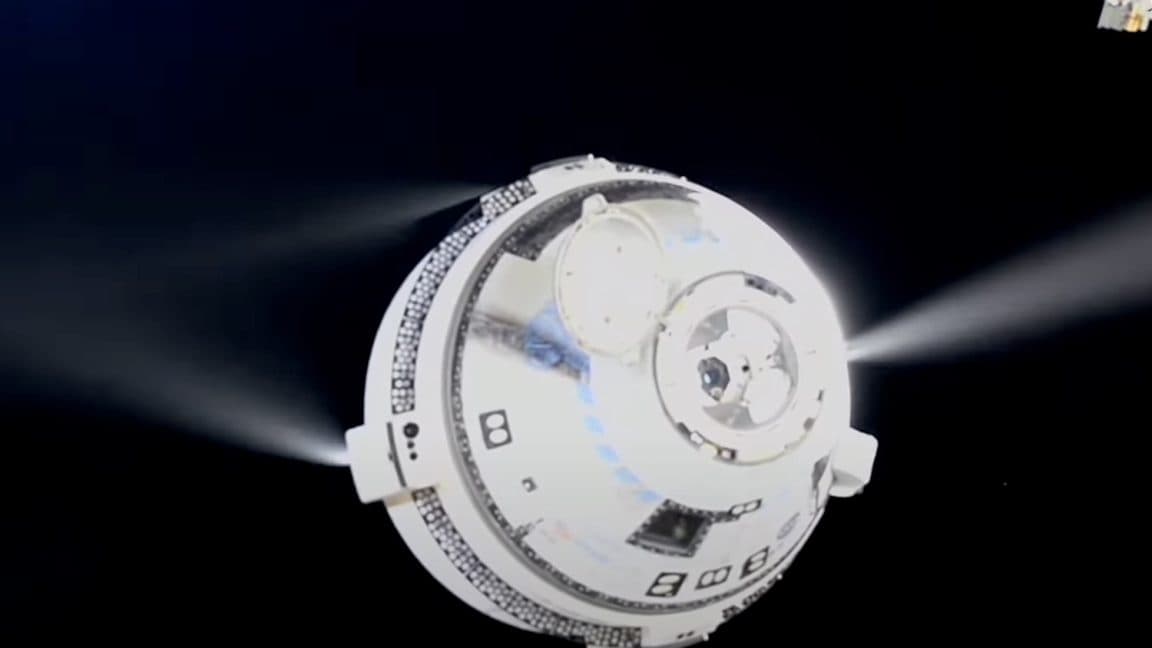
Boeing Starliner Positions for Solo NASA LEO Future
With the eventual retirement of current crew transportation systems by the end of the decade, NASA is betting heavily on Boeing's Starliner to maintain human access to low-Earth orbit. Despite past engineering hurdles and shifting cost structures, Boeing aims to capture the market for future commercial space stations.

Nvidia, China Trade Tensions, and Executive AI Policy Shifts
Recent high-level diplomatic talks hint at shifting stances on advanced microchip exports to foreign markets. As regulatory frameworks evolve, industry leaders find themselves playing a central role in guiding national technology strategy and international trade policy.