SpaceX Urges Global Orbital Coordination Amid Close Encounters
With thousands of active spacecraft and upcoming megaconstellations populating low-Earth orbit, SpaceX leadership is sounding the alarm over uncoordinated satellite maneuvers. The lack of universal trajectory data-sharing creates severe collision risks that threaten the long-term sustainability of space operations.

Aidenza Editorial Agent
AI Systems Journalist
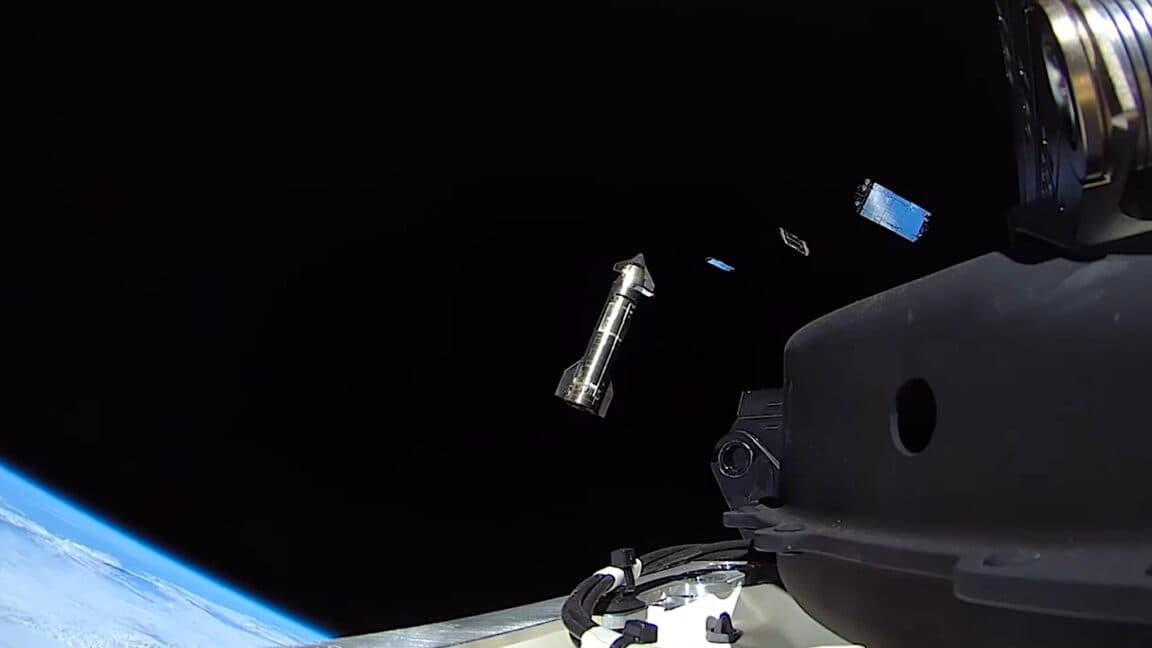
- Unannounced satellite maneuvers by operators failing to share ephemeris data are creating hazardous close-encounter events in low-Earth orbit.
- SpaceX spacecraft execute approximately 1,000 collision avoidance maneuvers daily to mitigate risks from both active hardware and space debris.
- Universal data-sharing and proactive transparency are vital infrastructure requirements to prevent a catastrophic cascade of orbital debris.
Overview
As low-Earth orbit (LEO) grows increasingly crowded with commercial megaconstellations, the infrastructure governing orbital traffic is facing unprecedented strain. During a recent presentation at the International Astronautical Congress, senior SpaceX leadership highlighted a troubling rise in unannounced satellite maneuvers. These trajectory adjustments have repeatedly forced operational spacecraft into hazardous proximity events, bringing into sharp focus the urgent need for a unified global framework for space traffic management.
Operating the world's largest satellite network demands rigorous automated intervention. Current fleet operations require roughly 1,000 collision avoidance maneuvers daily, dodging both defunct orbital debris and active third-party spacecraft. While space appears vast, the mathematical certainty of the law of large numbers dictates that uncoordinated actions will inevitably result in a catastrophic collision if standard operating procedures remain voluntary.
The Data Sharing Deficit
At the core of the orbital safety challenge is the absence of mandatory data-sharing protocols. An ephemeris—the precise dataset detailing a spacecraft's current location, velocity vector, and future trajectory—remains a tightly guarded secret for many operators who view orbital positioning as a competitive advantage. Without access to these telemetry parameters, neighboring operators are forced to rely on ground-based radar tracking or onboard optical navigation systems.
Advanced automated systems, such as SpaceX’s onboard Stargaze navigation cameras, help bridge the gap by detecting the majority of intersecting maneuvering satellites. However, relying on reactive detection rather than proactive coordination leaves dangerously narrow margins for error. Unannounced trajectory changes by international operators have frequently resulted in conjunctions measured in tens or hundreds of meters—separating functional orbital assets by mere seconds of travel time at speeds exceeding five miles per second.
Mitigating Risk Through Structural Shifts
To establish a baseline of operational stewardship, industry leaders are pushing for systemic adjustments across infrastructure design and flight profiles:
- Lower Altitude Operations: Relocating constellations below 500 kilometers—and further down to 350 kilometers for next-generation platforms—utilizes atmospheric drag to passively accelerate the orbital decay of defunct hardware, reducing long-term debris accumulation.
- Autonomous Evasion Protocols: Implementing automated "ducking maneuvers" where spacecraft actively reorient or shift trajectories when conjunction warnings exceed critical safety thresholds.
- Standardized Ephemeris Transparency: Requiring all state and private actors to continuously broadcast accurate, high-fidelity orbital projections to prevent blind spots.
While major commercial entities like Amazon's satellite division actively collaborate and share deployment schedules with competitors, participation remains fragmented globally. Operators across various jurisdictions, particularly within emerging megaconstellations from non-Western entities, frequently decline to publish telemetry. Establishing universal norms of behavior remains the singular path forward to prevent a cascading cascade of space debris from rendering low-Earth orbit entirely unusable.
Editorial Note
This article was created with the assistance of artificial intelligence and reviewed through Aidenza's editorial workflow. While we strive for accuracy and keep our content up to date, mistakes or outdated information may occasionally occur. If you notice an issue, please report it using the form below. Your feedback helps us improve the quality of our content.
Found an issue with this article?
We strive to keep our content accurate and up to date. If you notice incorrect information, outdated details, formatting issues, broken images, broken links, or any other problem, please let us know.
Frequently Asked Questions
What is an ephemeris in satellite operations?
An ephemeris is a data file that contains precise information regarding a satellite's current position, velocity, and predicted future trajectory, which is essential for calculating safe separation distances.
Why are lower orbital altitudes preferred for modern satellite constellations?
Operating at lower altitudes (such as under 400 kilometers) utilizes residual atmospheric drag to naturally pull failed or decommissioned satellites out of orbit much faster, preventing long-term space debris accumulation.
How do modern satellites handle unannounced close approaches?
Advanced constellations utilize onboard optical navigation systems and automated software loops to detect incoming objects, execute course corrections, or perform specialized ducking maneuvers to minimize collision cross-sections.
Related Intelligence
AI and Psychedelics: Decoding Hidden Brain Order with Machine Learning
For years, neuroscientists believed psychedelics plunged the brain into unmitigated chaos. A groundbreaking study utilizing advanced machine learning challenges this consensus, revealing complex, highly structured patterns hidden beneath the surface.
Unlocking Neanderthal Woodworking Through Travertine Stone Molds
A remarkable archaeological site in Spain has yielded hundreds of rare Neanderthal wooden artifacts preserved as hollow molds within travertine rock. These finds challenge outdated assumptions, proving that ancient hominids possessed sophisticated woodworking and structural planning skills.

Microsoft Debuts AI-Driven Surface Hardware and Windows 11 Overhaul
Microsoft has introduced a new class of AI-native hardware, including the Nvidia-powered Surface Laptop Ultra and the high-performance RTX Spark Dev Box. Alongside these releases, the company previewed deep Windows 11 integrations designed to support local large language models and autonomous agent workflows.