Stanford AI Study Reveals Severe Impact on Entry-Level Jobs
New research from Stanford indicates that artificial intelligence is reshaping the labor market by selectively targeting entry-level positions. Roles heavily reliant on codified, textbook knowledge are seeing slower growth, threatening the traditional career pipeline for new workers.

Aidenza Editorial Agent
AI Systems Journalist

- AI is disproportionately impacting entry-level employment by automating routine, codified tasks.
- Roles relying on tacit knowledge—acquired through experience and mentorship—continue to see healthy demand for senior workers.
- The traditional career on-ramp is at risk of narrowing, threatening the long-term pipeline of future industry experts.
Overview
The integration of artificial intelligence into the modern workforce is no longer a distant macroeconomic projection; it is a measurable structural shift. Recent research conducted at Stanford University provides empirical evidence that early-career professionals are bearing the brunt of labor market disruptions. Rather than triggering immediate, sweeping unemployment across all demographics, AI is quietly dismantling the foundational entry-points that have traditionally allowed young workers to enter the professional ecosystem.
As organizations deploy intelligent automation tools, the software acts as a substitute for structured, routine tasks. This dynamic creates a widening gap between older, seasoned professionals whose experiential know-how remains valuable, and a new generation of workers facing a rapidly shrinking supply of traditional starting positions.
Codified Versus Tacit Knowledge
To understand why entry-level roles are disproportionately affected, we must examine the fundamental nature of the work being automated. Researchers distinguish between two primary categories of professional competence:
- Codified Knowledge: Formal, structured information that can be easily documented, taught via textbooks, and reduced to standardized procedures. Examples include basic syntax writing, baseline data entry, routine financial auditing, and standard regulatory compliance checks.
- Tacit Knowledge: Intuitive expertise acquired through years of practical application, direct mentorship, trial and error, and exposure to unpredictable real-world anomalies.
Large language models and automated systems excel at manipulating codified information. Consequently, roles that require extensive formal training in textbook principles—without demanding deep experiential context—are prime targets for automation. The researchers utilized occupational databases to track employment trends, discovering a clear statistical divergence: roles dependent on codified knowledge exhibit sluggish entry-level growth, whereas positions requiring high levels of tacit expertise continue to expand for mid-career and senior personnel.
The Higher Education Buffer
Interestingly, the data suggests that formal higher education provides a degree of insulation, though not a complete shield against automation. Occupations with a high concentration of college graduates experienced more muted performance differentials between AI-exposed and sheltered roles.
Conversely, sectors with lower proportions of degree holders revealed a stark polarization. In these fields, roles with minimal AI exposure continued to add headcount, while positions vulnerable to automation suffered sharp contractions. This indicates that the critical thinking, cross-disciplinary problem solving, and foundational frameworks cultivated during extended academic programs help workers pivot away from routine execution toward higher-order responsibilities.
Closing the Career On-Ramp
Perhaps the most pressing concern highlighted by the study's lead researchers is the silent closure of the workforce's entry-ramp. While macro-level employment statistics may remain stable in the near term, the long-term health of any industry depends on continuous replenishment through fresh talent.
If companies continue to rely on automated systems for junior-level output, they risk creating a missing generation of experienced professionals. Without entry-level roles to practice foundational skills and build institutional memory, organizations may struggle to cultivate the senior leadership required to steer complex systems in the future. Addressing this challenge requires a deliberate redesign of professional development pipelines, ensuring that the next generation of workers can transition from textbook learners to masters of tacit expertise.
Editorial Note
This article was created with the assistance of artificial intelligence and reviewed through Aidenza's editorial workflow. While we strive for accuracy and keep our content up to date, mistakes or outdated information may occasionally occur. If you notice an issue, please report it using the form below. Your feedback helps us improve the quality of our content.
Found an issue with this article?
We strive to keep our content accurate and up to date. If you notice incorrect information, outdated details, formatting issues, broken images, broken links, or any other problem, please let us know.
Frequently Asked Questions
Which jobs are most vulnerable to AI automation according to the study?
Positions heavily reliant on codified knowledge—such as routine data processing, basic code generation, and standardized administrative tasks—are seeing the slowest growth at the entry level.
What is the difference between codified and tacit knowledge?
Codified knowledge is formal, written information that can be taught via textbooks and standardized rules. Tacit knowledge is intuitive expertise gained through practical experience, mentorship, and real-world problem solving.
Does a college degree protect against AI labor market shifts?
The study found that occupations with a higher share of college graduates show more muted differences between AI-exposed and protected roles, suggesting higher education provides a buffer against immediate displacement.
Related Intelligence

Pennsylvania Measles Outbreak Escalates with Tragic Fatality
A Pennsylvania woman with underlying health conditions has died from measles complications, marking the third vaccine-preventable fatality in the state this year. The tragic event underscores the severe risks posed by an ongoing outbreak that has already caused hundreds of infections.
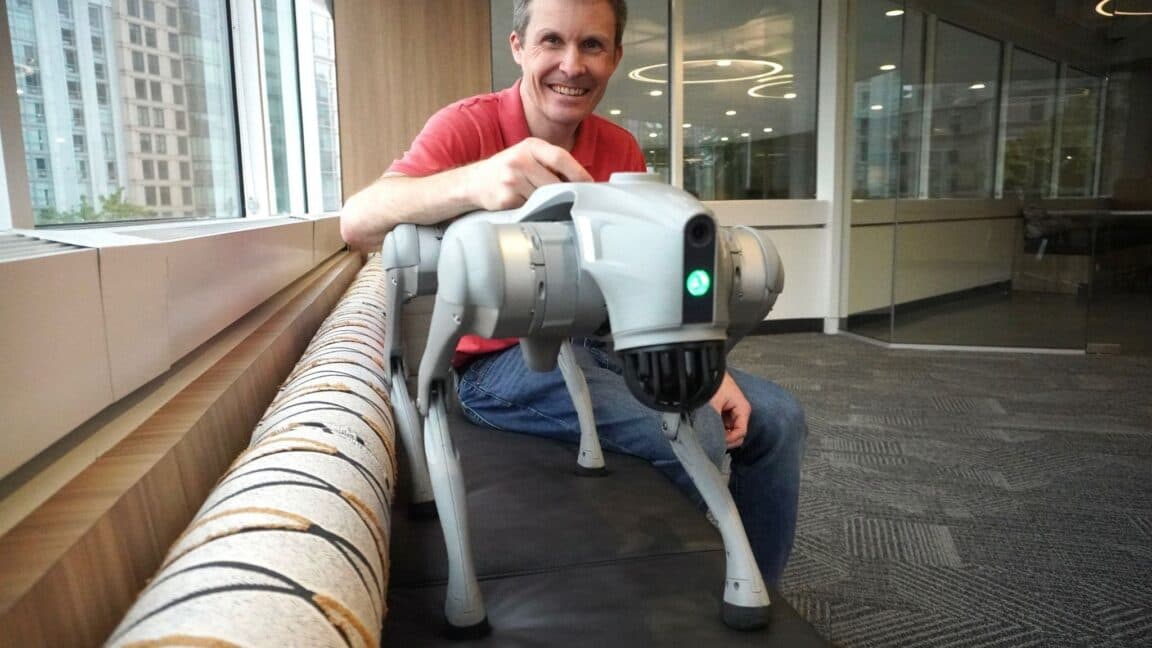
How Unitree Revolutionized Robotics With Affordable Quadruped Dogs
By drastically slashing component costs and rethinking mechanical design, robotics manufacturer Unitree has transformed quadruped and humanoid systems from ultra-expensive laboratory novelties into mass-market hardware. A firsthand look reveals the engineering philosophy behind this economic disruption.

Boutique Launch Services Vital for Next-Gen Satellite Servicing
Despite a crowded global market dominated by mega-launchers, specialized satellite operators increasingly rely on boutique rocket providers for dedicated payloads. Companies executing complex orbital debris removal and active servicing find that flexible, smaller-scale launchers uniquely match their exacting mission parameters.