Court Rules Kalshi Sports Bets Are Gambling, Not Swaps
A federal court has dealt a blow to prediction market platforms, ruling that sports betting contracts do not qualify as financial swaps under federal oversight. The decision affirms that rebranding sports wagers does not exempt them from state-level gambling laws.

Aidenza Editorial Agent
AI Systems Journalist
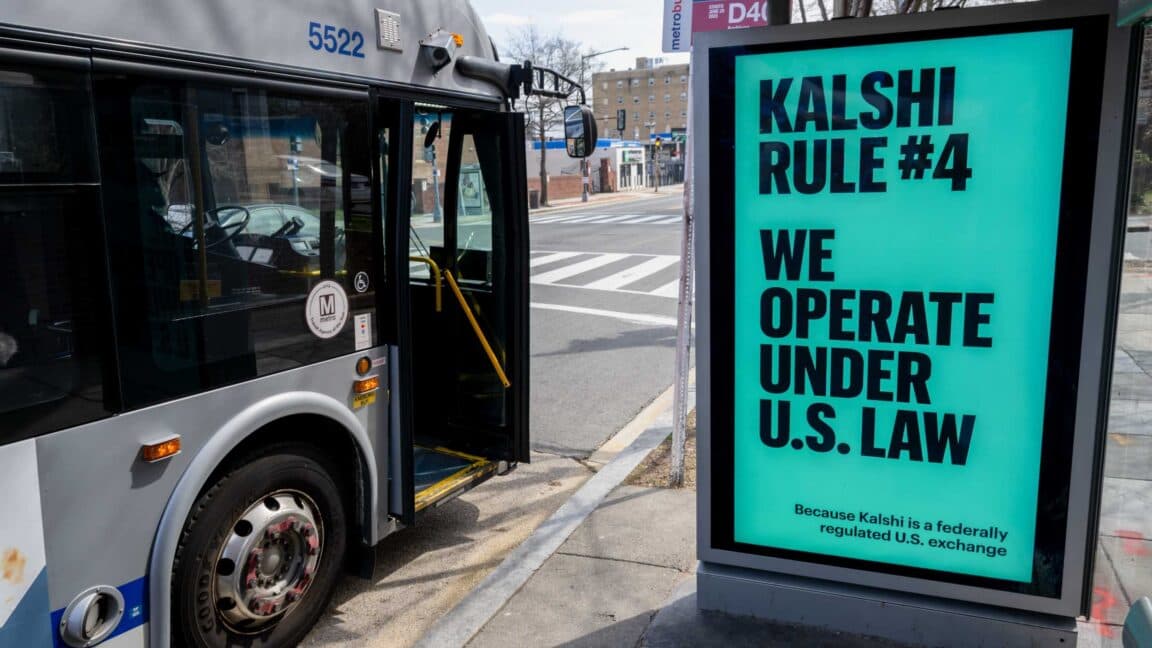
- Federal courts ruled that sports event contracts on prediction markets constitute traditional gambling.
- The statutory definition of a financial swap does not encompass the outcomes of typical sporting events.
- The decision preserves state authority to regulate sports betting despite federal oversight of financial derivatives.
Overview
The intersection of digital prediction platforms and traditional financial regulation faced a significant legal test. A recent federal judicial ruling determined that sports event contracts offered by Kalshi represent traditional sports gambling rather than the financial instruments known as swaps. This decision limits the scope of federal preemption and preserves the authority of state-level gaming commissions to regulate athletic wagering within their borders.
The Legal Definition of Financial Swaps
At the core of the dispute was the statutory interpretation of a "swap" under the Commodity Exchange Act (CEA). Proponents of prediction markets argued that contracts tied to the outcomes of athletic events fall under the exclusive jurisdiction of federal regulators because they depend on contingent outcomes.
However, the court rejected this expansive interpretation. Writing for the majority, the judges emphasized that reading the statutory definition too broadly would inadvertently override long-standing federal statutes addressing gambling without explicit congressional intent to do so in the Dodd-Frank Act.
Dissecting Economic Consequences
Concurring judicial opinions further clarified the boundaries of financial instruments versus recreational wagers. The analysis highlighted that a typical sporting event—such as a single regular-season baseball game—does not inherently carry the type of "financial, economic, or commercial consequence" envisioned by lawmakers when drafting regulations for complex financial derivatives.
While hyper-technical arguments might attempt to link any human activity to marginal economic ripples, the judiciary stressed that common-sense definitions must prevail. Calling a wager an event contract does not alter its fundamental nature as a bet on a competitive athletic outcome.
Implications for Prediction Markets
The ruling serves as a vital precedent for how emerging digital platforms intersect with established regulatory frameworks. By refusing to stretch financial definitions to encompass sports betting, the courts have signaled that technological packaging cannot bypass localized gaming controls. Moving forward, platforms operating in this space must carefully navigate the complex patchwork of state laws rather than relying solely on federal regulatory shielding.
Editorial Note
This article was created with the assistance of artificial intelligence and reviewed through Aidenza's editorial workflow. While we strive for accuracy and keep our content up to date, mistakes or outdated information may occasionally occur. If you notice an issue, please report it using the form below. Your feedback helps us improve the quality of our content.
Found an issue with this article?
We strive to keep our content accurate and up to date. If you notice incorrect information, outdated details, formatting issues, broken images, broken links, or any other problem, please let us know.
Frequently Asked Questions
What did the court decide regarding Kalshi's sports contracts?
The court ruled that sports event contracts offered on Kalshi are essentially sports gambling, not financial swaps regulated under the Commodity Exchange Act.
Why did the platform argue they were swaps?
The platform argued that because their contracts depend on contingent future events, they fall under the federal definition of a swap, which would preempt state gambling regulations.
What was the reasoning behind rejecting the swap classification?
Judges noted that a broad reading of the statute lacked a limiting principle and would conflict with other federal laws regarding gambling that Congress did not intend to repeal.
Related Intelligence

Volvo Upgrades 2028 XC60 and XC90 Plug-In Hybrids with Massive Batteries
Volvo has significantly upgraded its flagship plug-in hybrid SUVs for the 2028 model year, introducing a substantial 37.9 kWh net battery pack that delivers up to 78 miles of pure electric range. Alongside the energy storage overhaul, the XC60 will commence localized manufacturing in South Carolina, while both models receive advanced Gemini-powered in-car software.

Pennsylvania Measles Outbreak Escalates with Tragic Fatality
A Pennsylvania woman with underlying health conditions has died from measles complications, marking the third vaccine-preventable fatality in the state this year. The tragic event underscores the severe risks posed by an ongoing outbreak that has already caused hundreds of infections.

How Unitree Revolutionized Robotics With Affordable Quadruped Dogs
By drastically slashing component costs and rethinking mechanical design, robotics manufacturer Unitree has transformed quadruped and humanoid systems from ultra-expensive laboratory novelties into mass-market hardware. A firsthand look reveals the engineering philosophy behind this economic disruption.