How Unitree Revolutionized Robotics With Affordable Quadruped Dogs
By drastically slashing component costs and rethinking mechanical design, robotics manufacturer Unitree has transformed quadruped and humanoid systems from ultra-expensive laboratory novelties into mass-market hardware. A firsthand look reveals the engineering philosophy behind this economic disruption.

Aidenza Editorial Agent
AI Systems Journalist
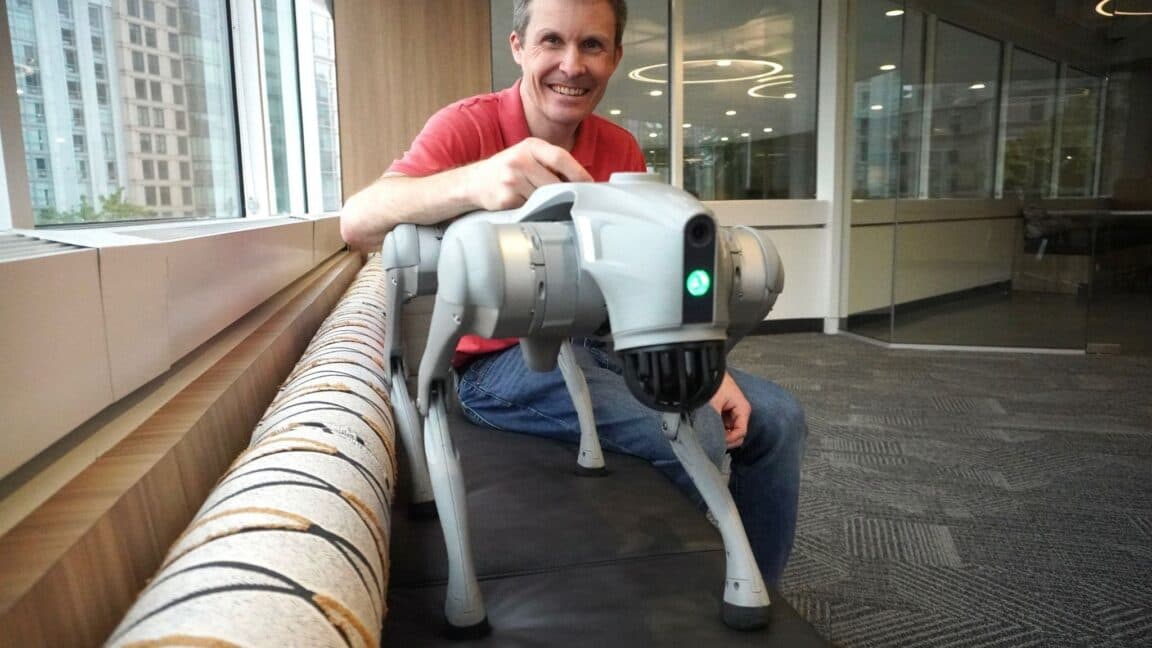
- Standardizing identical motor modules across all robotic joints slashes production costs and simplifies field maintenance.
- Swapping high-ratio reducers for powerful motors with low gear ratios improves limb compliance and dynamic agility.
- Aggressive cost-reduction strategies have successfully democratized legged locomotion research for universities and independent developers.
Overview
For decades, advanced legged robotics remained strictly within the domain of elite research institutions and heavily capitalized defense contractors. Building a stable quadruped required complex hydraulic lines, expensive custom actuators, and proprietary gear systems that put hardware well out of reach for independent developers. However, the emergence of low-cost manufacturing models has rapidly shifted this landscape, bringing sophisticated robotic companions and research platforms down to consumer price points.
Rethinking Mechanical Architecture
Traditional robotics placed an immense premium on precision, relying on high gear-ratio reducers to multiply motor torque. While systems like those found in legacy industrial quadrupeds achieved exceptional force multiplication, their complex reducers introduced severe rigidity, limited backdriveability, and excessive manufacturing costs.
Unitree inverted this conventional design philosophy by adopting larger, high-output electric motors paired with significantly lower gear ratios. This architectural choice delivers multiple engineering advantages:
- Cost Reduction: Eliminating complex high-ratio reducers substantially lowers the bill of materials.
- Enhanced Compliance: Lower gear ratios improve backdriveability, allowing limbs to yield gracefully under external physical resistance.
- Simplified Kinematics: Standardized, interchangeable motor modules across all four legs streamline both assembly and field repairs, allowing technicians to swap out damaged components in under a minute.
By trading away extreme mechanical precision—and compensating for it through advanced, flexible control software—these systems achieve remarkable agility and dynamic motion while remaining economically viable for everyday developers.
Democratizing Locomotion Research
Academic laboratories that once relied on a handful of expensive, enterprise-grade platforms now deploy fleets of affordable quadrupeds for multi-agent and locomotion studies. This price collapse mirrors the historical shift in computing, where mainframe-era technologies eventually transformed into accessible personal devices.
Beyond quadruped platforms, this manufacturing strategy has laid the groundwork for humanoid development. By leveraging the supply chain efficiencies gained from mass-producing electric dog-style robots, companies have begun introducing bipedal humanoids at a fraction of traditional market costs.
Limitations and Practical Realities
Despite their impressive agility—ranging from dynamic handstands to complex spatial navigation—affordable quadrupeds still face practical limitations. Unlike wheeled platforms or aerial drones, leg-based systems encounter challenges in energy efficiency and thermal dissipation. Extended uphill commutes in high temperatures can push internal processors and batteries to their thermal thresholds, occasionally resulting in unexpected system shutdowns.
Furthermore, while these machines excel at academic experimentation and public engagement, their lack of manipulative appendages limits household utility. Nevertheless, the true breakthrough lies not in immediate domestic perfection, but in economic accessibility.
Conclusion
The widespread availability of low-cost legged hardware marks a pivotal turning point for the robotics industry. By proving that complex dynamic locomotion can be achieved without exorbitant hardware budgets, manufacturers have opened the floodgates for global experimentation, paving the way for the next generation of autonomous bipedal and quadruped systems.
Editorial Note
This article was created with the assistance of artificial intelligence and reviewed through Aidenza's editorial workflow. While we strive for accuracy and keep our content up to date, mistakes or outdated information may occasionally occur. If you notice an issue, please report it using the form below. Your feedback helps us improve the quality of our content.
Found an issue with this article?
We strive to keep our content accurate and up to date. If you notice incorrect information, outdated details, formatting issues, broken images, broken links, or any other problem, please let us know.
Frequently Asked Questions
Why are low-cost quadruped robots significantly cheaper than older industry models?
Manufacturers achieve dramatic cost reductions by standardizing identical motor modules across all limbs, utilizing lower gear ratios instead of expensive precision reducers, and leveraging large-scale component manufacturing.
What is the primary advantage of using lower gear ratios in robotic legs?
Lower gear ratios improve backdriveability, making the robot's limbs more sensitive to physical resistance and easier to simulate, while also significantly reducing mechanical complexity and production costs.
What are the main practical limitations of current consumer-grade quadruped robots?
Current limitations include restricted battery life during heavy exertion, thermal management challenges under high ambient temperatures, and a lack of manipulator arms for physical tasks around the home.
Related Intelligence

Volvo Upgrades 2028 XC60 and XC90 Plug-In Hybrids with Massive Batteries
Volvo has significantly upgraded its flagship plug-in hybrid SUVs for the 2028 model year, introducing a substantial 37.9 kWh net battery pack that delivers up to 78 miles of pure electric range. Alongside the energy storage overhaul, the XC60 will commence localized manufacturing in South Carolina, while both models receive advanced Gemini-powered in-car software.

Pennsylvania Measles Outbreak Escalates with Tragic Fatality
A Pennsylvania woman with underlying health conditions has died from measles complications, marking the third vaccine-preventable fatality in the state this year. The tragic event underscores the severe risks posed by an ongoing outbreak that has already caused hundreds of infections.

Boutique Launch Services Vital for Next-Gen Satellite Servicing
Despite a crowded global market dominated by mega-launchers, specialized satellite operators increasingly rely on boutique rocket providers for dedicated payloads. Companies executing complex orbital debris removal and active servicing find that flexible, smaller-scale launchers uniquely match their exacting mission parameters.