Japan Launches MMX Mission to Return Martian Moon Phobos Samples
Japan has successfully launched the Martian Moons eXploration (MMX) mission, embarking on a five-year journey to collect pristine samples from Phobos. The historic interplanetary endeavor aims to resolve long-standing debates regarding the origin of Mars's two moons.

AI-assisted article, edited by Prashant Gupta · How we work
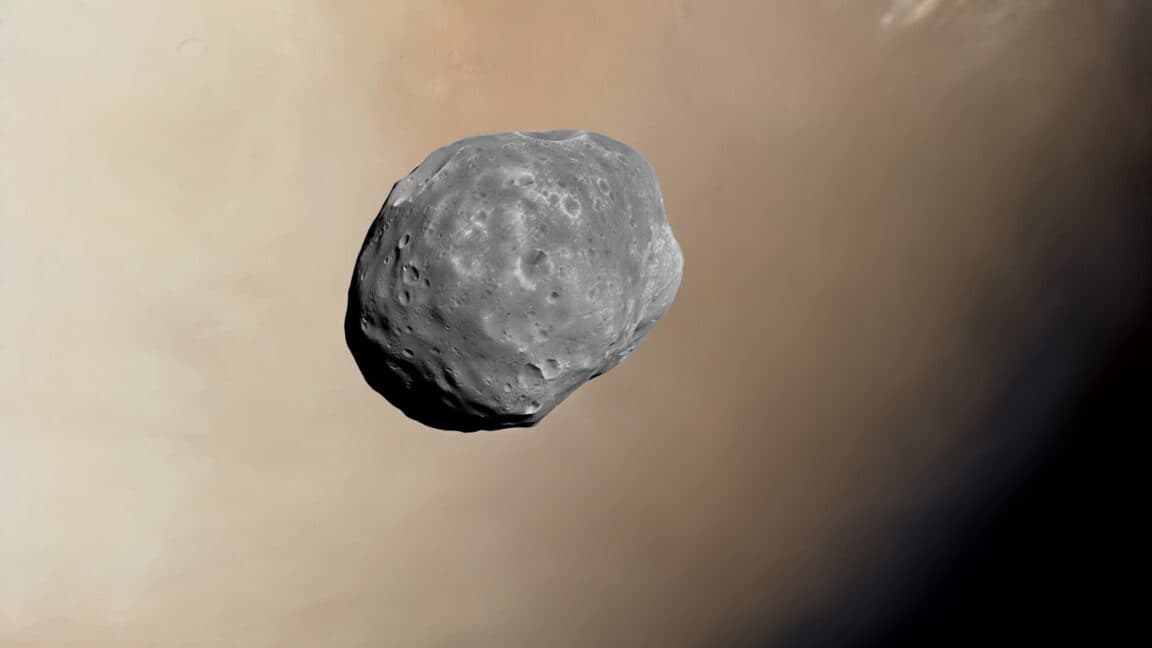
- MMX is the world's first dedicated mission aiming to successfully land on and return samples from a Martian moon.
- The spacecraft utilizes a specialized quasi-satellite orbit to overcome the complications of micro-gravity near Phobos while remaining bound to Mars.
- International collaboration plays a key role, with NASA, ESA, and French and German agencies contributing hardware, rovers, and analytical tools.
Overview
Space exploration entered a new phase as a flagship heavy-lift rocket carried the Martian Moons eXploration (MMX) spacecraft away from Earth's gravity well. Spearheaded by the Japan Aerospace Exploration Agency (JAXA), this $578 million interplanetary initiative is engineered to achieve a world-first milestone: landing on the largest Martian moon, Phobos, gathering subterranean and surface specimens, and transporting them back to terrestrial laboratories.
The spacecraft departed aboard an upgraded H3 launch vehicle, utilizing four solid rocket boosters and an extended payload shroud to manage the massive 4.5-metric-ton craft. With the vast majority of its mass dedicated to fuel, the propulsion stage accelerated the hardware past escape velocity, setting up a ten-month trajectory toward the Red Planet. Upon arrival, the mission will spend three years studying both Phobos and its smaller sibling, Deimos, before executing a delicate landing sequence.
Engineering the Interplanetary Journey
Executing a sample-return mission from a deep-space celestial body requires immense engineering precision. Because Phobos possesses micro-gravity—less than one-thousandth of Earth's pull—and sits squarely inside the intense gravitational well of Mars, conventional orbital insertion is impossible. Instead, the MMX probe will utilize a quasi-satellite orbit, remaining gravitationally tethered to Mars while executing complex maneuvers around the potato-shaped moon.
The architecture relies on shedding dead weight at crucial mission phases. Once the initial Mars insertion burn is complete, the primary propulsion module will be jettisoned. The remaining exploration module will approach the surface using specialized landing gear engineered to absorb the shock of touchdown without bouncing back into space or tipping over in the uneven terrain.
Robotic Surface Operations and International Collaboration
Before the main spacecraft touches down, it will deploy a shoebox-sized four-wheeled rover named Idefix, contributed by French and German space agencies. Designed to navigate extreme topography, Idefix will spend up to 100 days mapping and analyzing local surface conditions.
The climax of the mission involves a multi-hour landing event where the primary spacecraft will deploy two distinct collection mechanisms:
- Coring Drill: A robotic arm will bore into the regolith to extract a cigar-shaped core sample.
- Pneumatic Sampler: Developed by NASA, a high-pressure nitrogen gas cartridge will fire against the surface, sweeping loose particulate into a secure storage canister.
Scientists anticipate retrieving a minimum of 10 grams of material. Following surface operations, the ascent module will launch back into space, head for Earth, and release a specialized return capsule scheduled to land safely in South Australia in 2031.
Resolving Planetary Mysteries
Researchers remain divided on the fundamental nature of Phobos and Deimos. Leading hypotheses suggest they are either captured asteroids originating from the outer asteroid belt or primordial debris blasted into orbit by a colossal impact early in Martian history. By analyzing pristine physical samples in terrestrial labs, scientists hope to establish definitive ground truth.
Furthermore, because Phobos orbits in close proximity to Mars, the moon may have accumulated scattered meteorite ejecta from the Red Planet itself. This accidental archive could provide early chemical clues about Martian geology, paving the way for future crewed missions and long-term interplanetary architecture.
Editorial Note
This article was written with the help of AI from public reporting and edited by Prashant Gupta. "Aidenza's Take" is AI-generated analysis, not a personal opinion. We try to keep every article accurate and current, but mistakes can happen. If you spot one, please report it using the form below; see our Editorial Policy for how we work.
Found an issue with this article?
We strive to keep our content accurate and up to date. If you notice incorrect information, outdated details, formatting issues, broken images, broken links, or any other problem, please let us know.
Frequently Asked Questions
When will the MMX spacecraft return its samples to Earth?
The spacecraft is scheduled to leave the Martian system in 2030 and drop off its sample return capsule in South Australia in 2031.
What are the two leading theories regarding the origin of Phobos?
Scientists believe Phobos is either a captured asteroid from the outer asteroid belt or a collection of debris created by a giant impact on Mars early in the Solar System's history.
How much material is the MMX mission expected to bring back?
The mission aims to retrieve at least 10 grams (about one-third of an ounce) of material from the surface and subsurface of Phobos.
Related Intelligence

Avian Jet Lag Reveals Insights for Autonomous Systems
A two-decade tracking study reveals that Manx shearwaters experience a natural form of jet lag when flying across longitudes, subtly skewing their solar compass. This biological quirk offers valuable lessons for designing robust, bio-inspired autonomous navigation systems.

The FDA, Tavneos, and the Challenge of Drug Approvals
The US Food and Drug Administration is fighting to revoke its approval of the vasculitis drug Tavneos after discovering evidence of manipulated clinical trial data. This ongoing dispute highlights deep vulnerabilities in pharmaceutical oversight, corporate incentives, and the oversight of small biotechnology firms.
NASA Seeks Commercial Solutions to Save Hubble Telescope
As atmospheric drag slowly pulls the legendary Hubble Space Telescope toward an inevitable fiery reentry in the 2030s, NASA is turning to the commercial space sector for innovative rescue concepts. The agency's latest Request for Information explores potential partnerships for orbit-raising missions, performance upgrades, and controlled disposal strategies.