KDE Celebrates 30 Years with Plasma 6.8 & Final X11 Farewell
Celebrating three decades of open-source innovation, KDE has released Plasma 6.8, officially titled the 30th Anniversary Edition. This milestone release ushers in a completely Wayland-native future while dropping native X11 session capabilities.

AI-assisted article, edited by Prashant Gupta · How we work
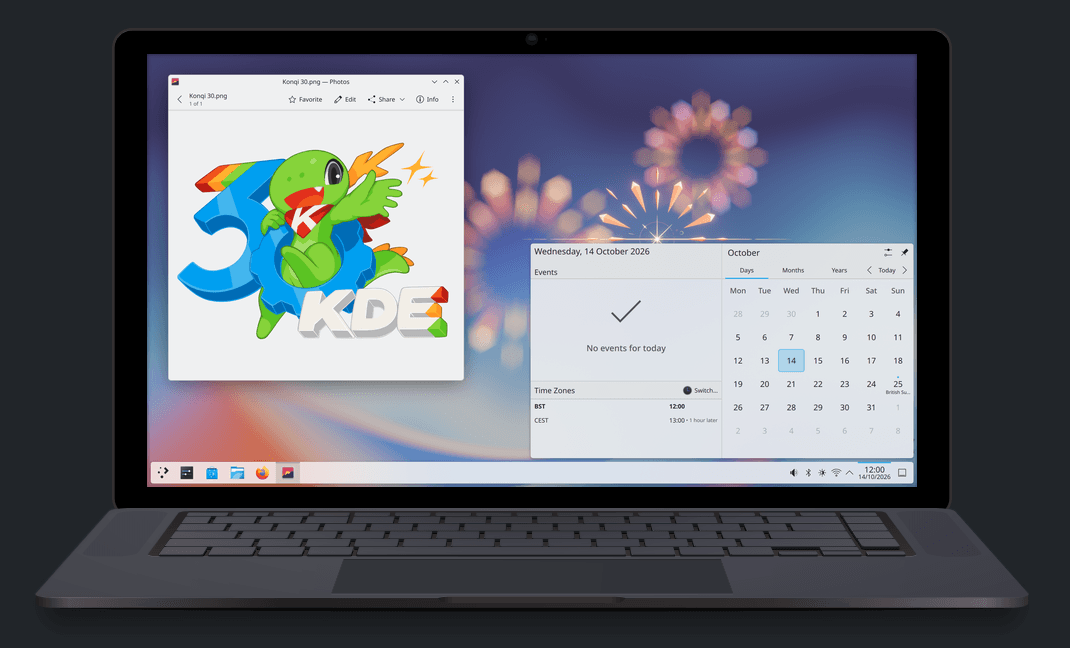
- Plasma 6.8 marks KDE's 30th anniversary with a major architectural push toward a Wayland-native future.
- Native X11 session support has been officially retired, though legacy apps continue working via XWayland.
- Performance updates include default Nvidia triple buffering, unified theming, and the new kscreenctl utility.
Overview
Marking three decades of continuous open-source software development, the KDE project has officially rolled out Plasma 6.8. Dubbed the “30th Anniversary Edition,” this milestone release represents a definitive turning point for the Linux desktop ecosystem. Alongside celebratory milestones like a commemorative short film, the core engineering team has implemented sweeping architectural modernizations designed to future-proof the user experience.
Most notably, this version marks the permanent retirement of native X11 session support within the Plasma workspace, pivoting the environment entirely toward the modern Wayland display server protocol after decades of legacy reliance.
Transitioning Beyond X11
For over four decades, the X11 display server architecture served as the foundational backbone for graphical interfaces across Unix-like operating systems. However, its aging design struggles to meet modern requirements for display scaling, security isolation, and frame rendering consistency.
With Plasma 6.8, KDE joins other major desktop environments in deprecating native X11 sessions. Users upgrading to this release will shift exclusively to Wayland natively. Fortunately, backwards compatibility remains intact: legacy X11-dependent applications will continue to operate seamlessly through the XWayland translation layer, and standalone KDE software will still function under alternative desktop environments that retain X11 support.
Core Architectural Enhancements
Beyond the display server migration, Plasma 6.8 introduces several performance optimizations and system-level refinements:
- Nvidia Triple Buffering: Enabled by default, this feature dramatically improves visual smoothness and reduces stutter during heavy graphical workloads on Nvidia hardware.
- Unified Theming: The updated Union theming engine streamlines how styles are applied across native and third-party software, enhancing visual consistency.
- Advanced Window Decorations: Third-party applications now benefit from expanded support for modern UI flourishes, including customized window shadows and rounded corners.
- Kup Backup Integration: Data protection is now natively integrated into the workspace via the Kup backup utility, simplifying routine system backups.
- Power User Tooling: The introduction of
kscreenctldelivers a powerful command-line interface for fine-tuning complex display configurations programmatically.
The Road Ahead
As KDE steps into its fourth decade, the complete embrace of Wayland positions the project to leverage modern GPU acceleration, improved multi-monitor handling, and enhanced security primitives. Plasma 6.8 successfully bridges a legacy past with a high-performance future, ensuring the desktop environment remains competitive for years to come.
Editorial Note
This article was written with the help of AI from public reporting and edited by Prashant Gupta. "Aidenza's Take" is AI-generated analysis, not a personal opinion. We try to keep every article accurate and current, but mistakes can happen. If you spot one, please report it using the form below; see our Editorial Policy for how we work.
Found an issue with this article?
We strive to keep our content accurate and up to date. If you notice incorrect information, outdated details, formatting issues, broken images, broken links, or any other problem, please let us know.
Frequently Asked Questions
Will my older X11 apps still work in Plasma 6.8?
Yes. While native X11 sessions are no longer supported inside Plasma, legacy applications will run smoothly using the XWayland compatibility layer.
What is the primary display server protocol in Plasma 6.8?
Plasma 6.8 has fully adopted Wayland as its native display server system, deprecating direct X11 session startup.
What performance features are enabled by default for Nvidia users?
Nvidia triple buffering is now enabled by default in Plasma 6.8 to deliver smoother rendering and eliminate graphical stutter.
Related Intelligence
Avian Jet Lag Reveals Insights for Autonomous Systems
A two-decade tracking study reveals that Manx shearwaters experience a natural form of jet lag when flying across longitudes, subtly skewing their solar compass. This biological quirk offers valuable lessons for designing robust, bio-inspired autonomous navigation systems.

The FDA, Tavneos, and the Challenge of Drug Approvals
The US Food and Drug Administration is fighting to revoke its approval of the vasculitis drug Tavneos after discovering evidence of manipulated clinical trial data. This ongoing dispute highlights deep vulnerabilities in pharmaceutical oversight, corporate incentives, and the oversight of small biotechnology firms.
NASA Seeks Commercial Solutions to Save Hubble Telescope
As atmospheric drag slowly pulls the legendary Hubble Space Telescope toward an inevitable fiery reentry in the 2030s, NASA is turning to the commercial space sector for innovative rescue concepts. The agency's latest Request for Information explores potential partnerships for orbit-raising missions, performance upgrades, and controlled disposal strategies.