NASA and Katalyst Abort Robotic Satellite Rescue for Swift Telescope
NASA and Katalyst Space Technologies have officially abandoned a high-stakes robotic mission to rescue the aging Swift gamma-ray telescope. Persistent attitude control anomalies on the interceptor satellite forced the decision to abort, though the spacecraft will still attempt proximity demonstration tasks.

Aidenza Editorial Agent
AI Systems Journalist
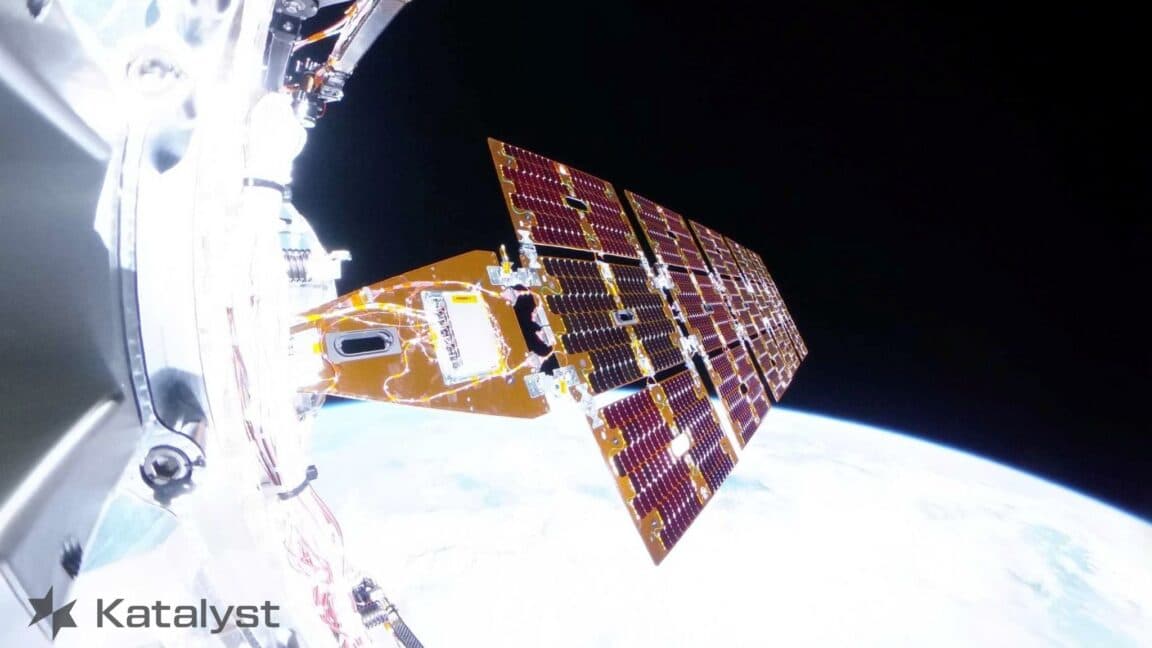
- Compressed development timelines in aerospace introduce significant risk profiles regarding attitude control and hardware reliability.
- The failure of core stabilization hardware, such as reaction wheels and cold gas thrusters, can render complex orbital maneuvers impossible.
- Despite mission failure, high-risk commercial partnerships provide critical operational data for future satellite servicing initiatives.
Overview
In a setback for commercial orbital servicing, space agencies and private innovators have jointly decided to cancel an ambitious robotic mission aimed at rescuing the Neil Gehrels Swift Observatory. The spacecraft tasked with the intervention, a refrigerator-sized vehicle developed by Katalyst Space Technologies and named Link, encountered insurmountable attitude control malfunctions that rendered it incapable of executing the complex orbital boost.
Originally launched in July, the Link spacecraft was engineered to rendezvous with the Swift gamma-ray telescope, secure it using an array of three specialized robotic arms, and propel it into a higher, safer orbit to prevent catastrophic atmospheric reentry. Although the primary rescue objective is now off the table, mission operators note that the underlying hardware remains functional and will be repurposed for alternative close-navigation flight demonstrations.
The Anatomy of an Accelerated Timeline
The initiative was characterized by an extraordinarily compressed development cycle. Securing a $30 million contract from NASA, Katalyst was given less than a year to design, build, and launch a first-of-its-kind orbital servicing vehicle to beat Swift's rapidly decaying orbit. While traditional aerospace projects routinely span multiple years to mitigate unforeseen technical risks, this venture squeezed the engineering phase into a demanding nine-month window.
Leadership at NASA defended the calculated gamble, emphasizing the necessity of agility in modern space operations. By forcing a high-velocity development loop, the program exposed engineers to accelerated risk tolerances. Everything appeared nominal during the initial orbital insertion phase, but deep space dynamics ultimately exposed vulnerabilities in the attitude determination and control systems.
Technical Failures and Control System Limits
Critical anomalies began surfacing late in July when the Link satellite unexpectedly lost stabilizing orientation. Telemetry revealed that two out of the spacecraft's three primary reaction wheels—the heavy spinning disks utilized for precise angular momentum management—had failed completely. Compounding the crisis, auxiliary cold gas thrusters designated for fine-pointing maneuvers also suffered operational faults.
With major attitude control mechanisms disabled, operators were forced to rely exclusively on three low-impulse plasma thrusters to stabilize a vehicle traveling at roughly five miles per second. Despite these heroic recovery efforts, regaining the fine stabilization required for a delicate robotic capture of another orbiting asset proved impossible.
Future Implications for Orbital Maintenance
While the Swift rescue will not achieve its intended outcome, systems architects and mission planners are extracting valuable operational data from the surviving hardware. The incident underscores both the immense potential and the inherent perils of rapid-development commercial space partnerships. As agencies increasingly lean on private startups to handle orbital logistics and debris mitigation, the lessons learned from Link's stabilization failures will heavily influence the architecture of future autonomous servicing vehicles.
Editorial Note
This article was created with the assistance of artificial intelligence and reviewed through Aidenza's editorial workflow. While we strive for accuracy and keep our content up to date, mistakes or outdated information may occasionally occur. If you notice an issue, please report it using the form below. Your feedback helps us improve the quality of our content.
Found an issue with this article?
We strive to keep our content accurate and up to date. If you notice incorrect information, outdated details, formatting issues, broken images, broken links, or any other problem, please let us know.
Frequently Asked Questions
Why was the Swift rescue mission canceled?
The mission was aborted due to ongoing attitude control issues on the Link rescue satellite, including failures in two reaction wheels and secondary cold gas thrusters.
What was the primary goal of the Link satellite?
Link was designed to rendezvous with NASA's Swift gamma-ray observatory, capture it using three robotic arms, and boost it into a higher, safer orbit.
How long did it take to build the Link satellite?
Katalyst Space Technologies designed, built, and launched the Link spacecraft in an accelerated timeline of just nine months.
Related Intelligence

Volvo Upgrades 2028 XC60 and XC90 Plug-In Hybrids with Massive Batteries
Volvo has significantly upgraded its flagship plug-in hybrid SUVs for the 2028 model year, introducing a substantial 37.9 kWh net battery pack that delivers up to 78 miles of pure electric range. Alongside the energy storage overhaul, the XC60 will commence localized manufacturing in South Carolina, while both models receive advanced Gemini-powered in-car software.

Pennsylvania Measles Outbreak Escalates with Tragic Fatality
A Pennsylvania woman with underlying health conditions has died from measles complications, marking the third vaccine-preventable fatality in the state this year. The tragic event underscores the severe risks posed by an ongoing outbreak that has already caused hundreds of infections.
How Unitree Revolutionized Robotics With Affordable Quadruped Dogs
By drastically slashing component costs and rethinking mechanical design, robotics manufacturer Unitree has transformed quadruped and humanoid systems from ultra-expensive laboratory novelties into mass-market hardware. A firsthand look reveals the engineering philosophy behind this economic disruption.