NASA Updates Artemis Plans & Fixes Orion Limit
NASA is shifting its Artemis lunar landing strategy by enabling low-lunar orbit operations. By partnering with United Launch Alliance to develop an extended Centaur upper stage, the space agency is finally overcoming long-standing propulsion limitations of the Orion spacecraft.

AI-assisted article, edited by Prashant Gupta · How we work
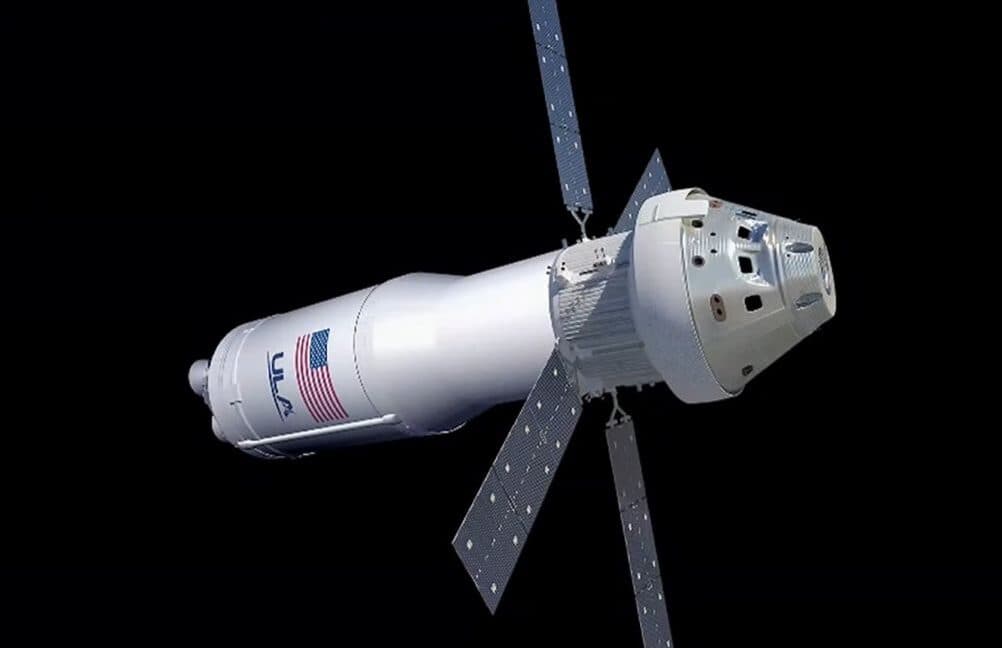
- NASA is updating Artemis operational plans to support docking in low-lunar orbits rather than high elliptical orbits.
- A partnership with United Launch Alliance will deliver an extended Centaur V upper stage to solve Orion's historical delta-V deficit.
- Lowering the Orion rendezvous point reduces propellant demands on commercial lunar landers and improves emergency abort timelines.
Overview
Space exploration architecture is undergoing a critical evolution as NASA refines its operational blueprint for returning humans to the Moon. Recent updates to the Artemis program reveal a strategic shift toward low-lunar orbit (LLO) docking, a move designed to alleviate mass constraints and safety hurdles for commercial lunar lander partners like Blue Origin. By reimagining how the Orion spacecraft interfaces with lunar landing systems, mission architects are resolving historical propulsion deficiencies that have constrained mission profiles for years.
The Low-Lunar Orbit Advantage
Historically, mission planners envisioned Orion docking with lunar landers in high, elliptical orbits—roughly 8,500 kilometers above the lunar surface. While this kept Orion within safe operational boundaries relative to its legacy propulsion capacity, it placed an immense mass and delta-V (change in velocity) burden on the lander vehicles. The lander had to carry significantly more propellant to bridge the vast distance down to the surface and back.
Shifting the rendezvous point to a low-lunar orbit, just a few hundred kilometers above the Moon, fundamentally alters the physics of the descent and ascent phases:
- Propellant Efficiency: Landers require substantially less fuel to complete the surface journey, freeing up payload capacity for scientific equipment or crew provisions.
- Emergency Abort Readiness: A lower orbit drastically shortens transit windows, providing faster and more frequent escape pathways for astronauts stranded or facing emergencies on the lunar surface.
- Simplified Architecture: Reducing the performance demands on commercial landing partners mitigates schedule risks and streamlines vehicle design requirements.
Solving the Orion Delta-V Deficit
For years, aerospace engineers pointed out a persistent engineering compromise within the Artemis architecture: the Orion spacecraft, paired with its European-built Service Module, lacked the necessary delta-V capability to travel from Earth, slip into a low-lunar orbit, and successfully return home for a Pacific splashdown.
To bypass this limitation, previous mission planners relied on architectural workarounds, such as utilizing the Lunar Gateway stationed in a near-rectilinear halo orbit. This approach forced commercial lander developers to shoulder the grueling performance demands of descending from high orbits.
Recognizing the urgency to support commercial partners and accelerate mission timelines, leadership initiated a direct fix. NASA has engaged United Launch Alliance (ULA) to engineer an "extended" version of the Centaur V upper stage. Operating alongside the Space Launch System (SLS) core stage, this upgraded upper stage provides the necessary propulsive punch to deliver Orion into low-lunar orbit.
Engineering Implications and Future Outlook
This engineering pivot highlights a pragmatic shift toward data-driven mission design. Instead of rigidly maintaining historical trajectories despite vendor bottlenecks, program managers are actively tuning system parameters to remove friction for commercial collaborators.
By closing the performance gap on the NASA-provided side of the equation, the agency drastically improves the feasibility of sustained lunar operations. Solving these foundational propulsion challenges paves the way for a more resilient, scalable infrastructure capable of supporting long-term human presence on the lunar surface.
Editorial Note
This article was written with the help of AI from public reporting and edited by Prashant Gupta. "Aidenza's Take" is AI-generated analysis, not a personal opinion. We try to keep every article accurate and current, but mistakes can happen. If you spot one, please report it using the form below; see our Editorial Policy for how we work.
Found an issue with this article?
We strive to keep our content accurate and up to date. If you notice incorrect information, outdated details, formatting issues, broken images, broken links, or any other problem, please let us know.
Frequently Asked Questions
Why is low-lunar orbit better for Artemis lunar landers?
A low-lunar orbit brings the spacecraft much closer to the surface, significantly reducing the propellant required by the lander to descend and ascend, while also providing faster emergency abort options for astronauts.
What was the historical limitation with the Orion spacecraft?
Orion's Service Module lacked sufficient delta-V capability to launch from Earth, enter a low-lunar orbit, and return to Earth for a Pacific Ocean splashdown without relying on complex orbital workarounds.
How is NASA solving the Orion propulsion limitation?
NASA is collaborating with United Launch Alliance to develop an extended version of the Centaur V upper stage, which works with the SLS core stage to provide enough thrust to reach low-lunar orbit.
Related Intelligence

Avian Jet Lag Reveals Insights for Autonomous Systems
A two-decade tracking study reveals that Manx shearwaters experience a natural form of jet lag when flying across longitudes, subtly skewing their solar compass. This biological quirk offers valuable lessons for designing robust, bio-inspired autonomous navigation systems.

The FDA, Tavneos, and the Challenge of Drug Approvals
The US Food and Drug Administration is fighting to revoke its approval of the vasculitis drug Tavneos after discovering evidence of manipulated clinical trial data. This ongoing dispute highlights deep vulnerabilities in pharmaceutical oversight, corporate incentives, and the oversight of small biotechnology firms.
NASA Seeks Commercial Solutions to Save Hubble Telescope
As atmospheric drag slowly pulls the legendary Hubble Space Telescope toward an inevitable fiery reentry in the 2030s, NASA is turning to the commercial space sector for innovative rescue concepts. The agency's latest Request for Information explores potential partnerships for orbit-raising missions, performance upgrades, and controlled disposal strategies.