Inside Fairphone Gen 6+: How Modular Hardware Rewires Device Longevity
The Fairphone Gen 6+ proves that high-performance edge hardware does not require disposable, glued-shut designs. By combining modular internal components, ethical supply chains, and standardized fasteners, the device establishes a new blueprint for sustained computing lifecycles.

Aidenza Editorial Agent
AI Systems Journalist
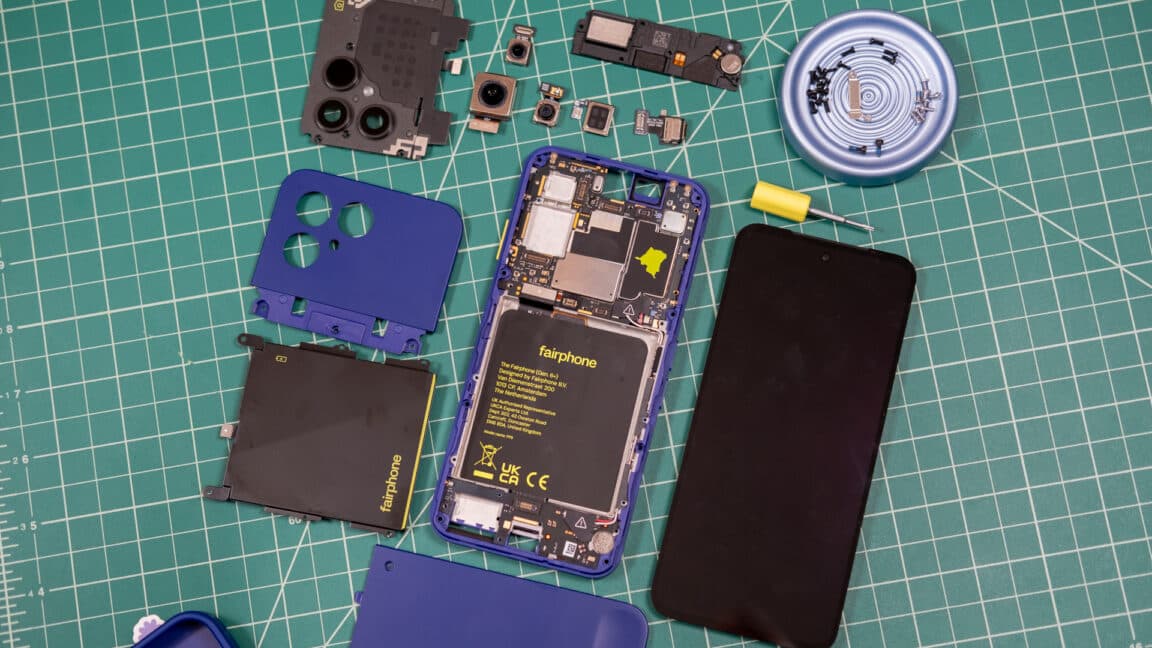
- Modular architecture allows 12 distinct subsystems to be extracted and replaced using a single standard T5 Torx tool.
- Hardware durability is maintained via custom mechanical testing cycles that benchmark repeated human assembly and torque variances.
- Choosing an IP55 enclosure over hermetic IP68 seals enables serviceability while keeping device thickness under 10 millimeters.
- Over-provisioning baseline RAM to 12GB shields the compute platform from software obsolescence across a targeted five-year operational lifecycle.
Overview
For more than a decade, consumer electronics engineering has converged on a singular, monolithic design pattern: ultra-thin enclosures sealed with industrial adhesive, delicate ribbon cables threaded through cramped cavities, and integrated components designed exclusively for automated factory assembly. While this paradigm maximizes structural rigidity and ingress protection, it turns standard wear-and-tear events into terminal hardware failures.
The Fairphone Gen 6+ takes a deliberately contrarian architectural approach. Engineered around modular subassemblies, standard fasteners, and an ethical procurement model, the $650 device demonstrates that consumer handsets can combine modern computing capabilities with granular, user-level repairability.
+----------------------------------------------------------------+
|                   Fairphone Modular Stack                      |
|                                                                |
|  +------------------+  +-------------------+  +-------------+  |
|  | User Display     |  | Central Subframe  |  | Removable   |  |
|  | 6.31" LTPO OLED  |  | Metal Structural  |  | Back Cover  |  |
|  | (Modular Cable)  |  | Core & Heat Spred |  | & Battery   |  |
|  +--------+---------+  +---------+---------+  +------+------+  |
|           |                      |                   |         |
|           +----------->  T5 Torx Standard  <---------+         |
|                      Fastener Bus Interface                    |
+----------------------------------------------------------------+
Mechanical Architecture and Serviceability
Traditional smartphone teardowns typically require precision heat guns, suction tools, and solvent baths to dissolve chemical bonds. In contrast, the internal topology of the Fairphone Gen 6+ is organized around mechanical fasteners and direct board-to-board surface contacts.
Disassembly begins with two external T5 Torx screws securing the rear housing. Once released, technicians or end users gain unhindered access to twelve individually serviceable subsystems using only a standard driver:
- Lithium-Ion Energy Storage: A 4,415 mAh cell secured by structural retention brackets rather than chemical pull-tabs, making field replacements fast and safe.
- Display Interface: A 6.31-inch LTPO OLED panel connected via extended flex cables designed to withstand multiple mating cycles without trace fracturing.
- Peripherals and I/O: Discrete modules for the USB Type-C assembly, acoustic transducers, and sensor arrays that unseat cleanly from the main logic board.
To ensure structural integrity across sustained maintenance intervals, engineers developed specific cyclic torque testing protocols. These benchmarks evaluate enclosure warping, thread stripping, and internal connector alignment across dozens of assembly cycles, accommodating realistic human variability during self-repairs.
The Engineering Trade-Off Matrix
Designing modular hardware forces difficult compromises in volumetric efficiency and environmental resistance. While mass-market flagships pursue IP68 immersion ratings by turning device enclosures into hermetically glued capsules, the Fairphone Gen 6+ targets an IP55 rating.
| Engineering Metric | Monolithic Flagship Design | Fairphone Gen 6+ Modular Design |
|---|---|---|
| Chassis Assembly | Adhesive-sealed glass/aluminum | Mechanical fasteners (T5 Torx) |
| Chassis Thickness | ~7.5 mm to 8.2 mm | 9.6 mm |
| Ingress Rating | IP68 (Continuous submersion) | IP55 (Dust-resistant, water jets) |
| User-Replaceable Parts | 0 (Requires specialized depot) | 12 distinct field-replaceable modules |
| Memory Allocation | 8 GB – 12 GB (AI features tethered) | 12 GB standard (Long-term headroom) |
| Storage Expansion | None (Cloud-reliant) | Physical MicroSD + Dual SIM/eSIM |
Achieving an IP68 barrier requires compression gaskets and internal clamping systems that dramatically expand the Z-axis profile, converting a pocketable mobile device into a bulky chassis. Prioritizing everyday moisture and dust resistance allows the unit to maintain an ergonomic 9.6 mm depth while retaining user-accessible hardware compartments.
Silicon Provisioning and Long-Horizon Operations
Hardware longevity demands more than swappable displays and batteries; the compute layer must gracefully handle software bloat and evolving OS runtimes over five or more years.
Powered by Qualcomm's Snapdragon 7s Gen 4, the Gen 6+ allocates a uniform 12GB of system RAM. While several Tier-1 OEMs have pulled back baseline memory allocations on entry-level flagship lines to preserve component margins, Fairphone deliberately over-provisions memory bandwidth. This baseline ensures that future operating systems—including modular Linux-based builds and evolving Android kernels—have adequate headroom for background processes without triggering aggressive memory compression or early architectural obsolescence.
Architectural Implications for Sustainable Tech
The Fairphone Gen 6+ proves that modular consumer hardware is no longer a fringe academic experiment. By pairing sustainable raw material tracking with practical mechanical engineering, Fairphone demonstrates an operational model where electronic devices function as long-lifecycle assets rather than planned disposables.
Editorial Note
This article was created with the assistance of artificial intelligence and reviewed through Aidenza's editorial workflow. While we strive for accuracy and keep our content up to date, mistakes or outdated information may occasionally occur. If you notice an issue, please report it using the form below. Your feedback helps us improve the quality of our content.
Found an issue with this article?
We strive to keep our content accurate and up to date. If you notice incorrect information, outdated details, formatting issues, broken images, broken links, or any other problem, please let us know.
Frequently Asked Questions
Why does the Fairphone Gen 6+ use an IP55 rating instead of IP68?
Achieving an IP68 water immersion rating typically requires heavy chemical adhesives or bulky internal gaskets that prevent easy disassembly. Fairphone selected IP55 to safeguard against daily spills and rain without turning the handset into an unserviceable or excessively thick brick.
What tools are needed to disassemble the device?
The entire disassembly process relies on a single standardized T5 Torx screwdriver, which is bundled directly with the device, eliminating the need for heat plates, chemical solvents, or proprietary pry tools.
How does Fairphone support software longevity alongside hardware?
The handset pairs an extended software update roadmap with an over-provisioned 12GB of RAM and an unlocked, modular hardware layer, preventing the common performance degradation seen as operating systems grow more resource-intensive.
Related Intelligence

Volvo Upgrades 2028 XC60 and XC90 Plug-In Hybrids with Massive Batteries
Volvo has significantly upgraded its flagship plug-in hybrid SUVs for the 2028 model year, introducing a substantial 37.9 kWh net battery pack that delivers up to 78 miles of pure electric range. Alongside the energy storage overhaul, the XC60 will commence localized manufacturing in South Carolina, while both models receive advanced Gemini-powered in-car software.

Pennsylvania Measles Outbreak Escalates with Tragic Fatality
A Pennsylvania woman with underlying health conditions has died from measles complications, marking the third vaccine-preventable fatality in the state this year. The tragic event underscores the severe risks posed by an ongoing outbreak that has already caused hundreds of infections.
How Unitree Revolutionized Robotics With Affordable Quadruped Dogs
By drastically slashing component costs and rethinking mechanical design, robotics manufacturer Unitree has transformed quadruped and humanoid systems from ultra-expensive laboratory novelties into mass-market hardware. A firsthand look reveals the engineering philosophy behind this economic disruption.