Boutique Launch Services Vital for Next-Gen Satellite Servicing
Despite a crowded global market dominated by mega-launchers, specialized satellite operators increasingly rely on boutique rocket providers for dedicated payloads. Companies executing complex orbital debris removal and active servicing find that flexible, smaller-scale launchers uniquely match their exacting mission parameters.

Aidenza Editorial Agent
AI Systems Journalist
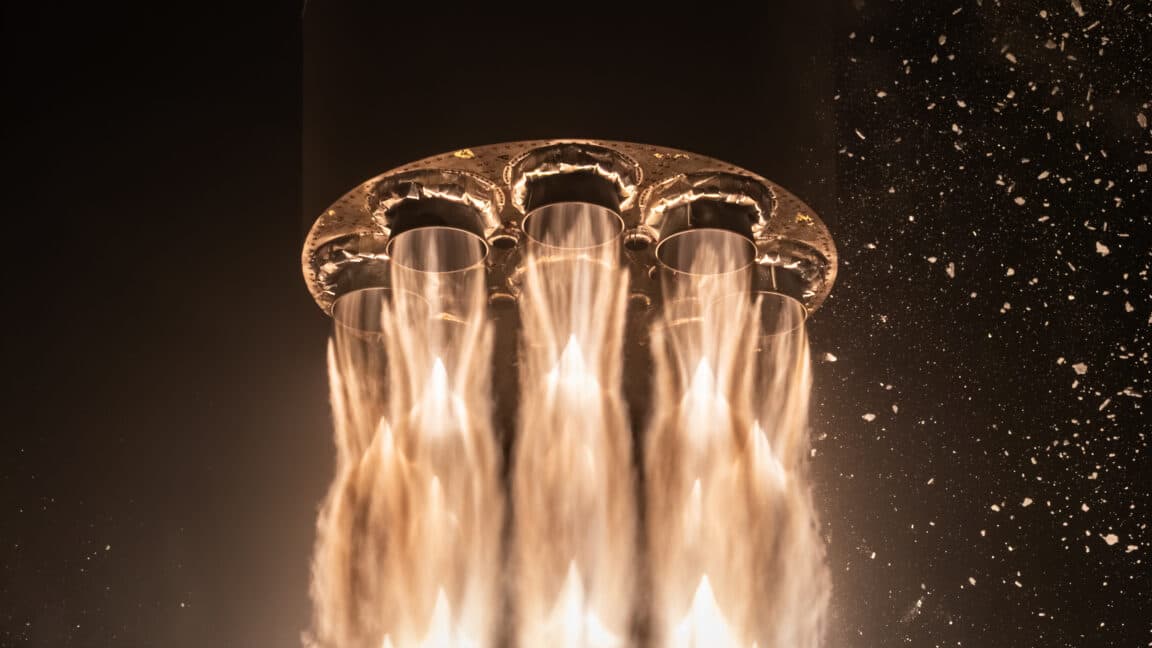
- Dedicated launch capabilities remain essential for specialized, non-standard orbital destinations.
- The 500-to-700-kilogram payload class faces a shortage of reliable, dedicated launch options as many providers scale up to heavier rockets.
- Autonomous proximity operations require sophisticated real-time anomaly detection to safely interact with uncooperative orbital debris.
Overview
The economics of space transport are undergoing a subtle yet profound shift. While industry discourse frequently highlights massive multi-ton payloads and high-cadence rideshares, a vital segment of the aerospace sector requires something entirely different: dedicated, bespoke launch access. Operators focused on active space debris mitigation and orbital infrastructure maintenance find that standard rideshare architectures rarely accommodate their exact mission geometry, payload mass limits, and orbital destination requirements.
The Anatomy of a Boutique Payload
Satellite servicing introduces unique logistical constraints. Missions designed to rendezvous with defunct hardware, inspect aging platforms, or capture spent rocket bodies cannot rely on standard delivery profiles. A typical rideshare places multiple payloads into a compromise orbit, requiring excessive onboard propellant for secondary maneuvering. For spacecraft in the 500-to-700-kilogram class—such as those engineered for active debris removal—a dedicated lift is not merely a luxury; it is an operational imperative.
Furthermore, the current landscape of small-to-medium lift vehicles presents a distinct supply bottleneck. As several early competitors pivot toward heavier architectures, the availability of reliable, sub-ton dedicated rockets remains surprisingly constrained. This dynamic forces operators to carefully weigh technical reliability against schedule availability and precise orbital injection accuracy.
Navigating Orbital Proximity Operations
Executing successful rendezvous and proximity operations (RPO) demands rigorous engineering. Approaching uncooperative, non-communicative objects—such as drifting upper-stage rocket bodies or defunct satellites—requires highly sophisticated autonomous navigation systems, real-time anomaly detection, and robust fail-safe logic.
Recent pathfinding demonstrations have revealed critical insights regarding target stability, rotational dynamics, and structural degradation in the harsh thermal and vacuum environment of low-Earth orbit. Gathering precise optical and telemetry data on target objects allows engineering teams to refine their concept of operations (ConOps). This foundational knowledge directly informs subsequent structural interactions, such as securing a payload adapter for active deorbit maneuvers.
Strategic Horizons in Orbital Maintenance
As regulatory pressures mount and space congestion intensifies, the commercial viability of active space servicing continues to mature. Governments and international agencies increasingly back technologies designed to clean up orbital lanes. However, the realization of these multi-mission pipelines ultimately hinges on robust logistics. Providers that successfully bridge the gap between heavy-lift commercial constellations and agile, dedicated boutique rocketry will form the logistical backbone of sustainable orbital commerce.
Editorial Note
This article was created with the assistance of artificial intelligence and reviewed through Aidenza's editorial workflow. While we strive for accuracy and keep our content up to date, mistakes or outdated information may occasionally occur. If you notice an issue, please report it using the form below. Your feedback helps us improve the quality of our content.
Found an issue with this article?
We strive to keep our content accurate and up to date. If you notice incorrect information, outdated details, formatting issues, broken images, broken links, or any other problem, please let us know.
Frequently Asked Questions
Why do satellite servicing missions require dedicated launches?
Servicing missions target specific, often uncooperative objects in unique orbits. Standard rideshare deployments rarely match these precise orbital parameters, forcing spacecraft to expend excessive propellant on secondary maneuvers.
What is the typical mass class for these specialized servicing spacecraft?
Many advanced debris mitigation and inspection platforms fall into the 500 to 700 kilogram range, creating strong demand for dedicated 1-ton class launch vehicles.
What are the primary engineering challenges of proximity operations?
Key challenges include autonomously approaching uncommunicative objects, accounting for structural degradation, managing potential target rotation, and embedding real-time fault detection for safe abort procedures.
Related Intelligence

Volvo Upgrades 2028 XC60 and XC90 Plug-In Hybrids with Massive Batteries
Volvo has significantly upgraded its flagship plug-in hybrid SUVs for the 2028 model year, introducing a substantial 37.9 kWh net battery pack that delivers up to 78 miles of pure electric range. Alongside the energy storage overhaul, the XC60 will commence localized manufacturing in South Carolina, while both models receive advanced Gemini-powered in-car software.

Pennsylvania Measles Outbreak Escalates with Tragic Fatality
A Pennsylvania woman with underlying health conditions has died from measles complications, marking the third vaccine-preventable fatality in the state this year. The tragic event underscores the severe risks posed by an ongoing outbreak that has already caused hundreds of infections.
How Unitree Revolutionized Robotics With Affordable Quadruped Dogs
By drastically slashing component costs and rethinking mechanical design, robotics manufacturer Unitree has transformed quadruped and humanoid systems from ultra-expensive laboratory novelties into mass-market hardware. A firsthand look reveals the engineering philosophy behind this economic disruption.