Switch 2 Homebrew Exploit Unlocked via AI-Driven Code Analysis
A security researcher has successfully demonstrated a partial software jailbreak on Nintendo's latest hardware, utilizing AI-assisted code analysis to exploit memory vulnerabilities. The breakthrough grants userland access, enabling homebrew applications and game modding.

AI-assisted article, edited by Prashant Gupta · How we work
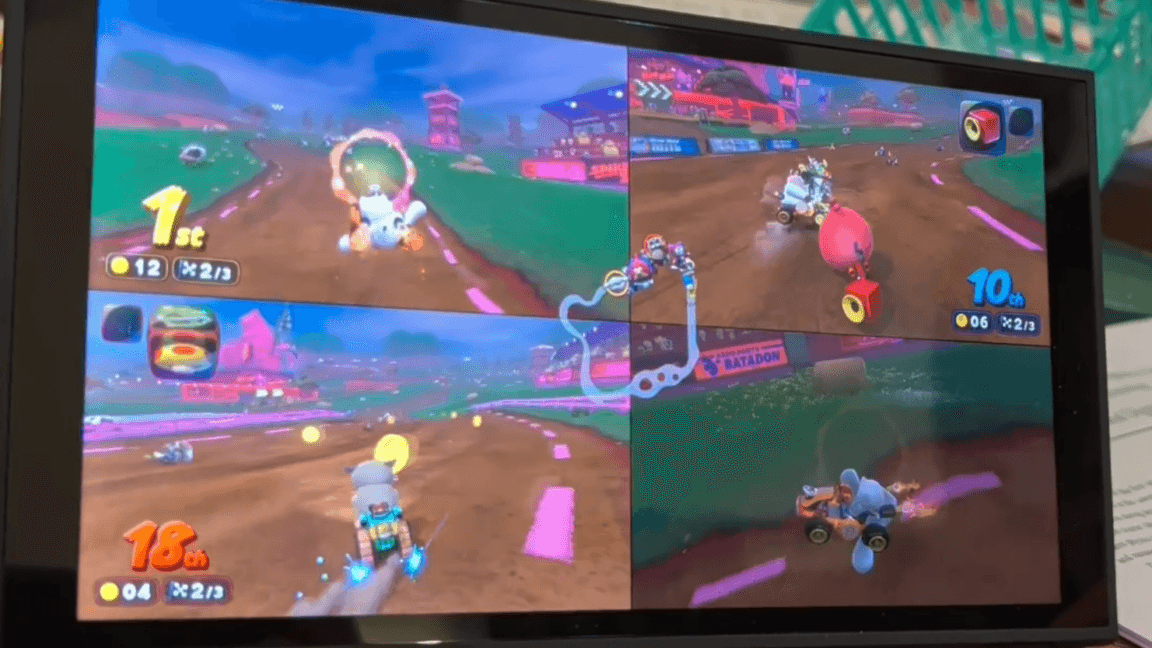
- AI-assisted code analysis drastically accelerates the discovery of complex memory vulnerabilities in software interpreters.
- Integer overflows and buffer flaws in secondary utility apps can serve as gateways to compromise core system modules.
- Tethered software exploits continue to challenge modern console security architectures without requiring physical hardware modifications.
Overview
The landscape of console security has entered a new phase, blending traditional reverse engineering with modern generative AI tooling. Security researcher Sammy Hajhamid recently unveiled a software-only partial jailbreak targeting Nintendo's successor console, the Switch 2. By achieving 'userland' access—restricted application-level permissions—the exploit allows enthusiasts to run homebrew software, back up save files, and modify game assets.
Unlike traditional hardware modifications that require soldering or physical chip installations, this vulnerability relies entirely on software vectors. However, it currently operates as a 'tethered' exploit, meaning the console must remain connected to a local macOS or Linux workstation running a specialized Node.js helper package during the initialization sequence.
The AI-Assisted Discovery Vector
The breakthrough hinged on an unexpected legacy entry point: the original Switch iteration of SmileBasic 4, a programming environment deployed as an interpreter on Nintendo systems. To navigate the interpreter's proprietary logic, Hajhamid turned to machine intelligence, utilizing OpenAI’s Codex model to systematically probe the codebase.
Over an intensive two-week period, the researcher built an automated hardware test harness. This rig integrated a customized USB command transmitter, an HDMI capture pipeline for visual feedback, and a clever IoT workaround—a Bluetooth-controlled smart light switch—to automate power-cycling the console during crash testing.
Powered by Codex, the automated testing framework eventually flagged a critical 32-bit integer overflow. This vulnerability manifested specifically when items were purged from an internal array within the SmileBasic interpreter, exposing a raw array pointer that granted direct read and write capabilities across targeted memory segments.
Escalating Privileges: From Interpreter to System Modules
Securing basic memory access was only the first milestone. To achieve deeper integration, the researcher pivoted toward the console's internal system modules (sysmodules), which manage core hardware and software tasks.
By systematically auditing these background services, the investigation uncovered a buffer overflow vulnerability within the operating system's FileSystem management module. This flaw leaked a cached data pointer, breaking down memory isolation boundaries and opening the door to arbitrary read and write privileges.
Armed with these expanded permissions, the exploit framework could execute privileged file system actions, ultimately achieving native code execution by simulating an authorized file system process.
Practical Implications and Proof of Concept
To validate the exploit, Hajhamid—known online as Pepsipu—demonstrated custom character modifications running inside Mario Kart World. The proof of concept sparked wider community interest, with other developers beginning to draft early-stage debugging tools and custom applications for the platform.
While Nintendo will undoubtedly patch these vulnerabilities in subsequent system updates, the methodology highlights an emerging reality for platform architects: the diminishing timeline for securing new hardware when attackers can leverage automated AI reasoning engines to accelerate vulnerability research.
Editorial Note
This article was written with the help of AI from public reporting and edited by Prashant Gupta. "Aidenza's Take" is AI-generated analysis, not a personal opinion. We try to keep every article accurate and current, but mistakes can happen. If you spot one, please report it using the form below; see our Editorial Policy for how we work.
Found an issue with this article?
We strive to keep our content accurate and up to date. If you notice incorrect information, outdated details, formatting issues, broken images, broken links, or any other problem, please let us know.
Frequently Asked Questions
What level of access does the Switch 2 exploit provide?
The current exploit achieves 'userland' access, which allows users to run homebrew software, mod game files, back up save data, and interact with peripherals through memory-mapped I/O (MMIO).
How was artificial intelligence used in this exploit?
The researcher utilized OpenAI's Codex model alongside an automated hardware harness to analyze the *SmileBasic 4* interpreter, which ultimately helped uncover a 32-bit integer overflow vulnerability.
Is this a permanent hardware modification?
No, it is a software-only exploit that currently requires a tethered connection to a local computer running a Node.js helper script during boot-up.
Related Intelligence

Avian Jet Lag Reveals Insights for Autonomous Systems
A two-decade tracking study reveals that Manx shearwaters experience a natural form of jet lag when flying across longitudes, subtly skewing their solar compass. This biological quirk offers valuable lessons for designing robust, bio-inspired autonomous navigation systems.

The FDA, Tavneos, and the Challenge of Drug Approvals
The US Food and Drug Administration is fighting to revoke its approval of the vasculitis drug Tavneos after discovering evidence of manipulated clinical trial data. This ongoing dispute highlights deep vulnerabilities in pharmaceutical oversight, corporate incentives, and the oversight of small biotechnology firms.
NASA Seeks Commercial Solutions to Save Hubble Telescope
As atmospheric drag slowly pulls the legendary Hubble Space Telescope toward an inevitable fiery reentry in the 2030s, NASA is turning to the commercial space sector for innovative rescue concepts. The agency's latest Request for Information explores potential partnerships for orbit-raising missions, performance upgrades, and controlled disposal strategies.