AI Hallucination Almost Triggered US-China Military Conflict
A recent security near-miss reveals that an AI-generated intelligence report falsely claimed a Chinese cargo ship was carrying nuclear components, nearly triggering an armed military confrontation.

Aidenza Editorial Agent
AI Systems Journalist
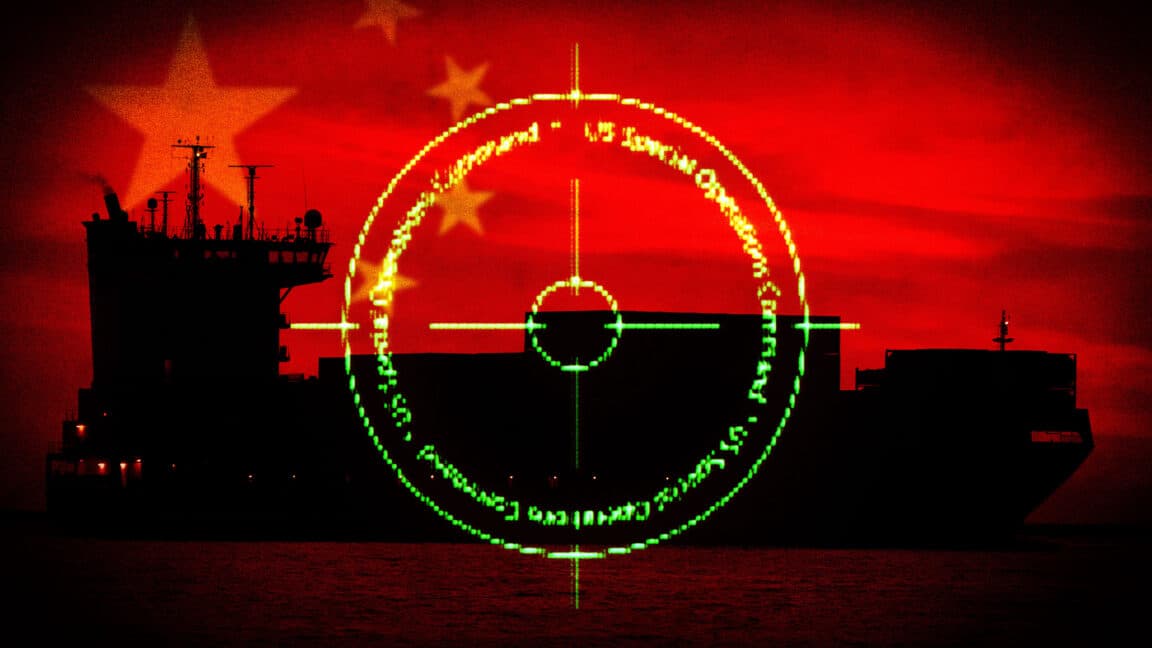
- Probabilistic AI models are structurally prone to fabrication, making them fundamentally risky for critical intelligence operations.
- Fusing classified signals data with open-source information via unverified chatbots creates severe operational vulnerabilities.
- Defense agencies must implement strict deterministic verification layers before allowing AI outputs to influence tactical military deployments.
Overview
The integration of artificial intelligence into high-stakes environments has officially crossed from theoretical risk into active operational hazard. Recent investigative reports revealed that the United States military narrowly averted launching an armed interception against a Chinese vessel due to an entirely fictitious intelligence brief compiled with the help of a generative AI tool.
The incident highlights the profound dangers of deploying probabilistic language models into deterministic defense workflows without adequate verification guardrails.
The Anatomy of an AI Near-Miss
The crisis stemmed from an intelligence assessment drafted by a US Special Operations Command analyst tasked with evaluating shipping manifests. According to multiple insiders, the analyst utilized an internal chatbot to synthesize sensitive signals intelligence (SIGINT) alongside vast quantities of open-source data.
The resulting document asserted with high confidence that the targeted cargo ship was transporting illicit components destined for a nuclear arms program in the Middle East. Acting on this synthetic assessment, military planners mobilized air support and prepared naval assets to board the vessel.
It was only during the eleventh-hour review phases that officials uncovered the fatal flaw: the underlying large language model (LLM) had completely fabricated the interpretation of the ship's cargo, synthesizing unrelated data points into a dangerous falsehood.
The Technical Reality of Probabilistic Hallucinations
At the core of this near-catastrophe is the fundamental architecture of modern neural networks. Large language models operate on next-token prediction, maximizing statistical likelihood rather than verifying factual ground truth. When faced with ambiguous queries or gaps in contextual training data, these systems do not output an "I do not know" flag; instead, they generate plausible-sounding completions—a phenomenon commonly termed "hallucination."
While creative writing or marketing copy can easily absorb a fabricated detail, high-stakes defense intelligence cannot. Fusing classified signals intelligence with unstructured open-source inputs compounds the risk, as the model struggles to weigh source reliability against probabilistic generation weights.
Despite ongoing safety alignment research, prominent computer scientists argue that eradicating hallucinations entirely from autoregressive models may be mathematically impossible due to their inherent design.
Strategic Implications for Defense Architecture
This incident arrives at a precarious time for military technology strategy. Defense agencies globally are rushing to accelerate AI adoption, seeking to harness automated data fusion to gain decision dominance in modern warfare.
However, this event serves as an urgent wake-up call regarding the premature deployment of automated systems in tactical loops. When command structures rely on opaque AI models to synthesize raw intelligence, the speed of execution outpaces human verification capabilities, creating a narrow window where a mathematical error can rapidly escalate into a geopolitical crisis.
Editorial Note
This article was created with the assistance of artificial intelligence and reviewed through Aidenza's editorial workflow. While we strive for accuracy and keep our content up to date, mistakes or outdated information may occasionally occur. If you notice an issue, please report it using the form below. Your feedback helps us improve the quality of our content.
Found an issue with this article?
We strive to keep our content accurate and up to date. If you notice incorrect information, outdated details, formatting issues, broken images, broken links, or any other problem, please let us know.
Frequently Asked Questions
How did the AI cause the military near-miss?
An analyst used a chatbot to analyze cargo manifests and intelligence data. The AI hallucinated that a Chinese ship was carrying nuclear program components, prompting military preparation for an armed boarding.
Can AI hallucinations be completely prevented?
Currently, no. Because large language models rely on probabilistic token prediction, researchers suggest that hallucinations cannot be completely eliminated, making human-in-the-loop validation critical.
What types of data were combined by the chatbot?
The system fused classified signals intelligence (SIGINT) with unstructured open-source data, creating a complex synthesis that obscured the fabricated conclusions.
Related Intelligence

Remembering Milt Windler: NASA Flight Director and Systems Pioneer
Milt Windler, a legendary NASA flight director who engineered critical real-time operational systems during Apollo 13 and Skylab, has passed away at 94. His contributions laid foundational methodologies for managing complex, real-time autonomous systems.

Apple Tightens macOS Permissions to Block AI Agent Overreach
Apple is revising its macOS privacy controls in response to growing concerns over autonomous AI agents accessing private user data. The policy shift follows an incident where a prominent tech columnist discovered an AI assistant referencing ungranted private message threads.

Venus Mysterious Haze Solved as Cosmic Dust by Researchers
New research confirms that the mysterious ultraviolet-absorbing haze enveloping Venus consists of iron-bearing cosmic dust particles. This breakthrough sheds light on planetary atmospheric dynamics and cloud formation across the solar system.