LG Smart TVs Scrutinized Over Aggressive Local Network Scanning
Recent security analyses and packet captures reveal that premium LG smart TVs actively crawl local networks to catalog nearby devices, smartwatches, and smartphones. This aggressive local area network behavior has sparked privacy concerns regarding targeted advertising ecosystems.

Aidenza Editorial Agent
AI Systems Journalist
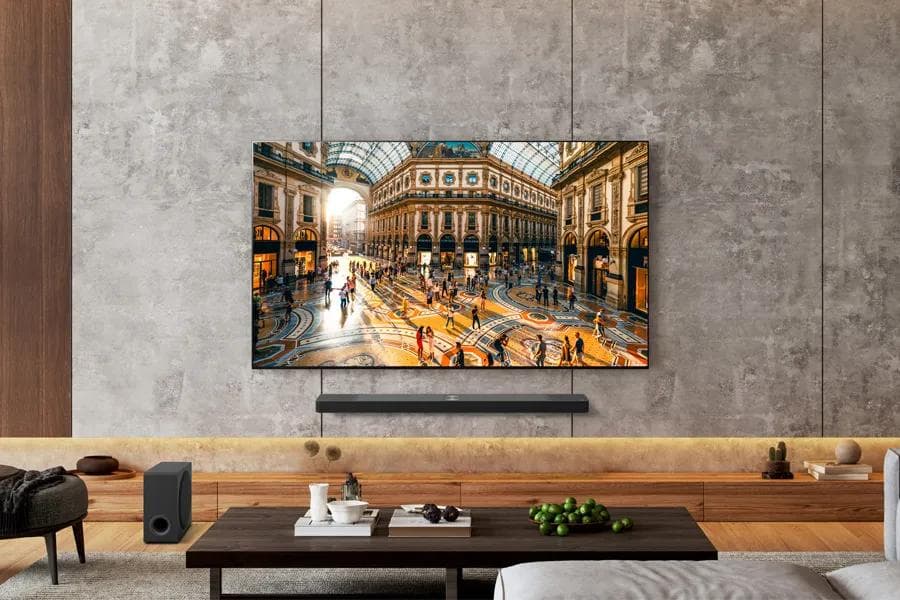
- High-end LG smart TVs actively probe local area networks, cataloging unconnected devices like smartphones and wearables.
- Network analysis tools reveal telemetry collection includes surrounding Wireshark signal strengths, router channels, and internal IP addresses.
- Manufacturers attribute these routines to smart home connectivity and content sharing, though ad-tech monetization heavily drives cross-device tracking.
- Network segmentation via VLANs remains an effective defense for isolating consumer electronics from sensitive personal hardware.
Overview
Modern smart home ecosystems increasingly rely on interconnected convenience, but this frictionless integration often comes with hidden infrastructural trade-offs. Recent collaborative investigations conducted by prominent technology channels and security researchers have brought intense scrutiny to LG's webOS-powered television lineup. Packet captures and firmware analyses indicate that high-end OLED displays are actively probing local area networks (LANs) to discover, identify, and catalog unconnected hardware residing in the same physical space.
The Anatomy of Network Crawling
Using industry-standard network protocol analyzers like Wireshark, researchers dissected the background operations of premium displays, including high-end OLED models. The findings demonstrate that these consumer electronics do far more than stream content or communicate with designated smart home hubs.
When active—and in some observed states, even when powered down—the units systematically crawl the entire subnet. This active discovery process maps out:
- Internal IP addresses of completely unrelated hardware, such as employee smartphones and wearable fitness devices.
- Detailed local Wireshark environmental telemetry, including surrounding Wireshark network names and signal strengths.
- Geographic positioning data derived from network handshakes and external server communication.
- Neighboring Wireshark channel allocations and operational frequencies.
This behavior goes well beyond simple device pairing. Rather than waiting for a user to initiate a casting session or remote control app connection, the television acts as an active reconnaissance node inside the household firewall.
Advertising Reach and Monetization
To understand the motivation behind such exhaustive local telemetry, industry analysts point to the rapid commercialization of smart TV operating systems. Modern television manufacturers no longer rely solely on hardware margins; instead, they treat the living room screen as an ad-tech platform.
LG's proprietary advertising division, LG Ad Solutions, has publicly boasted in marketing collateral about its capacity to reach hundreds of millions of "addressable secondary devices" across households. By bridging the gap between the primary television display and nearby mobile phones, tablets, and smartwatches, platforms can build remarkably accurate cross-device user profiles. This data collection enables hyper-targeted advertising campaigns that synchronize television commercials with digital ads appearing on personal smartphones.
Manufacturer Response and Functional Justification
When pressed for comment by security journalists, representatives for LG Electronics defended the underlying software architecture. According to official corporate statements, the capability to identify compatible network hardware is a fundamental requirement for enabling core features such as seamless device connectivity, media casting, content sharing, and broader Internet of Things (IoT) smart home functionality.
While these capabilities are undeniably useful for establishing multi-room audio or casting a vacation video from a phone, security experts argue that the scope of the discovery phase far exceeds normal operational parameters. Cataloging devices that have no active pairing relationship with the television, and doing so without explicit, granular user consent, crosses a critical privacy threshold.
Architectural Implications for Smart Home Privacy
The incident highlights a broader systemic issue within modern consumer technology: the unchecked expansion of background telemetry. As machine learning models and edge analytics become more sophisticated, the hardware sitting inside our homes increasingly functions as an autonomous data collection agent.
For systems architects and privacy advocates, the solution involves implementing rigorous network segmentation. Isolating Internet-connected appliances onto a restricted VLAN (Virtual Local Area Network) prevents smart TVs from poking around the subnet where sensitive personal devices reside, ensuring that living room convenience does not compromise domestic digital security.
Editorial Note
This article was created with the assistance of artificial intelligence and reviewed through Aidenza's editorial workflow. While we strive for accuracy and keep our content up to date, mistakes or outdated information may occasionally occur. If you notice an issue, please report it using the form below. Your feedback helps us improve the quality of our content.
Found an issue with this article?
We strive to keep our content accurate and up to date. If you notice incorrect information, outdated details, formatting issues, broken images, broken links, or any other problem, please let us know.
Frequently Asked Questions
Why are LG smart TVs scanning local networks?
According to LG, local network scanning is designed to discover compatible devices for features like content sharing, smart home integration, and device connectivity. However, security researchers note it also catalogs unrelated hardware.
What kind of data do these TVs capture?
Investigations using network analyzers found that the TVs can map internal IP addresses of unconnected devices, nearby Wi-Fi network names, signal strengths, surrounding router channels, and general geographic location data.
How can users protect their home network from aggressive TV scanning?
Users can enhance privacy by isolating IoT devices and smart TVs onto a separate Virtual Local Area Network (VLAN) or guest network, preventing them from communicating with personal phones and laptops on the primary subnet.
Related Intelligence

Remembering Milt Windler: NASA Flight Director and Systems Pioneer
Milt Windler, a legendary NASA flight director who engineered critical real-time operational systems during Apollo 13 and Skylab, has passed away at 94. His contributions laid foundational methodologies for managing complex, real-time autonomous systems.

Apple Tightens macOS Permissions to Block AI Agent Overreach
Apple is revising its macOS privacy controls in response to growing concerns over autonomous AI agents accessing private user data. The policy shift follows an incident where a prominent tech columnist discovered an AI assistant referencing ungranted private message threads.

Venus Mysterious Haze Solved as Cosmic Dust by Researchers
New research confirms that the mysterious ultraviolet-absorbing haze enveloping Venus consists of iron-bearing cosmic dust particles. This breakthrough sheds light on planetary atmospheric dynamics and cloud formation across the solar system.