Surviving a Rare Penetrating Brain Injury
Medical professionals have documented the exceptional recovery of an individual who survived a knife penetrating through his eye and deep into his brain. Despite the severe trauma, the patient experienced remarkably few lasting neurological deficits.

AI-assisted article, edited by Prashant Gupta · How we work
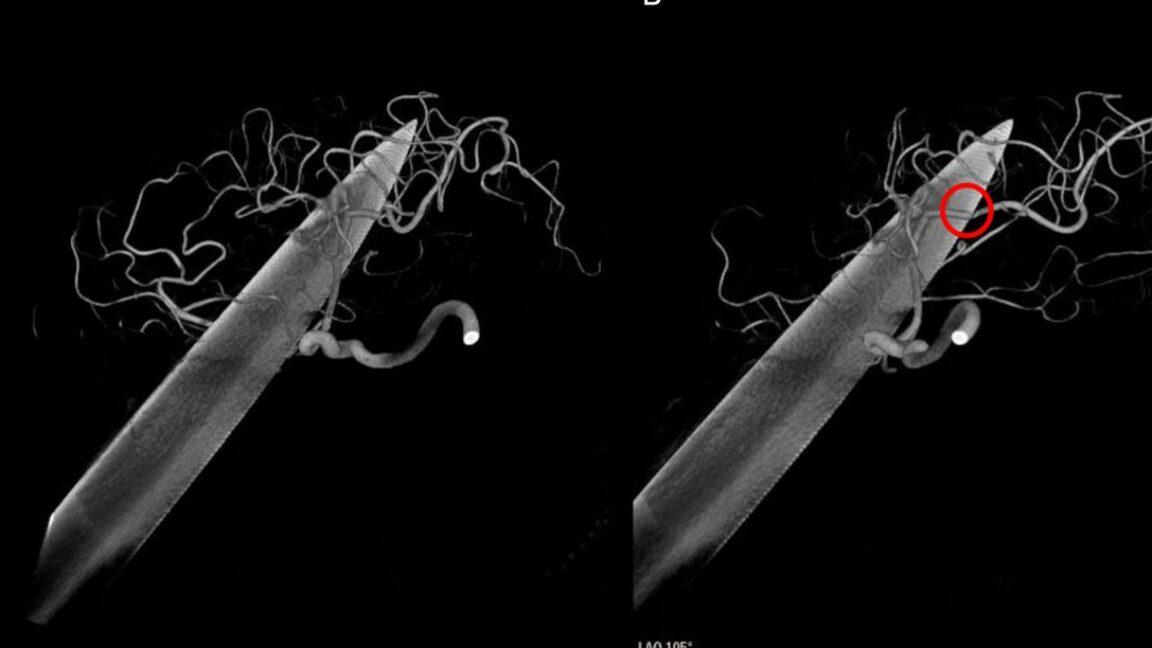
- Precise anatomical trajectory relative to critical blood vessels and brain structures dictates survival outcomes more than the visual severity of trauma.
- Low-velocity penetrating injuries carry substantial medical risks, including hemorrhage, infection, and neurological deficits.
- Advanced postoperative monitoring and rapid surgical intervention are vital for mitigating secondary complications like edema and seizures.
Overview
Medical literature frequently documents severe neurological trauma, but rare cases continue to challenge our understanding of human brain resilience. A recent report outlines the extraordinary survival and recovery of a patient who suffered a penetrating brain injury when a knife passed directly through his eye socket and into intracranial tissue.
Following emergency surgical intervention, the patient was transferred to an intensive care unit where his clinical condition stabilized rapidly. Extubation occurred within twenty-four hours of the procedure. Although initial evaluations revealed transient right-sided muscular weakness, this neurological deficit resolved completely within forty-eight hours.
Diagnostic Imaging and Surgical Recovery
Postoperative computed tomography (CT) scans displayed expected physiological responses along the surgical path. Imaging confirmed minor localized hemorrhage, controlled edema, and traces of intracranial air resulting from the foreign object's trajectory. Swelling near the anterior limb of the internal capsule explained the brief motor weakness on the patient's right side.
Despite the dramatic physical path of the blade, critical language centers, motor coordination, and higher cognitive functions remained intact. Medical staff reported no secondary complications such as bacterial infections, meningitis, cerebrospinal fluid leaks, or post-traumatic seizures. Following successful stabilization, the patient was discharged with ongoing provisions for psychological and ophthalmological support.
Clinical Context and Historical Parallels
Penetrating brain injuries caused by low-velocity implements—such as knives, rods, and nails—historically carry severe risks of morbidity and mortality. Complications typically stem from vascular damage, severe hemorrhaging, or deep-seated abscesses. While high-velocity ballistic events represent the majority of penetrating trauma, low-velocity incidents remain uniquely unpredictable.
Attending physicians noted parallels to historical milestones in neurology, most notably the 1848 case of Phineas Gage, who survived an iron rod passing through his skull. Modern clinicians emphasize that ultimate functional recovery often relies less on the sheer visual severity of the trauma and more on the exact anatomical trajectory relative to critical vascular networks and subcortical structures.
Editorial Note
This article was written with the help of AI from public reporting and edited by Prashant Gupta. "Aidenza's Take" is AI-generated analysis, not a personal opinion. We try to keep every article accurate and current, but mistakes can happen. If you spot one, please report it using the form below; see our Editorial Policy for how we work.
Found an issue with this article?
We strive to keep our content accurate and up to date. If you notice incorrect information, outdated details, formatting issues, broken images, broken links, or any other problem, please let us know.
Frequently Asked Questions
What kind of neurological deficits did the patient experience?
The patient experienced transient right-sided muscular weakness due to localized swelling near the internal capsule, which fully resolved within two days.
Why are low-velocity penetrating brain injuries dangerous?
They carry high risks of severe hemorrhage, vascular injury, abscess formation, meningitis, cerebrospinal fluid leaks, and seizures.
How does this compare to historical cases like Phineas Gage?
Both cases highlight instances of severe frontal lobe penetration with unexpectedly preserved neurological function, demonstrating that outcomes depend heavily on the exact anatomical path of the trauma.
Related Intelligence

Cracking Superconductor Mysteries via Electrical Noise
Physicists have resolved a decades-old mystery regarding high-temperature superconductors by tuning into electrical shot noise. The breakthrough confirms that missing electrons in cuprates form pairs long before achieving superconductivity.

Tracing the Bantu Expansion Through Genetics and Archaeology
A multidisciplinary alliance of geneticists, linguists, and archaeologists is successfully reconstructing the expansive prehistoric migration of Bantu-speaking communities. By combining modern DNA sequencing with ancient material artifacts, researchers are charting how these pioneering populations reshaped the cultural, linguistic, and technological landscape of sub-Saharan Africa.

Blue Origin Unveils Northstar Engine for New Glenn
Blue Origin has introduced major upgrades to its New Glenn rocket, including the Northstar engine designed to slash manufacturing costs by 75 percent. Featuring high-degree 3D printing and reduced component counts, the architecture aims to enable a launch cadence of over 1,000 flights annually.