Tesla Semi Faces Infrastructure Hurdles Despite Massive Fleet Order
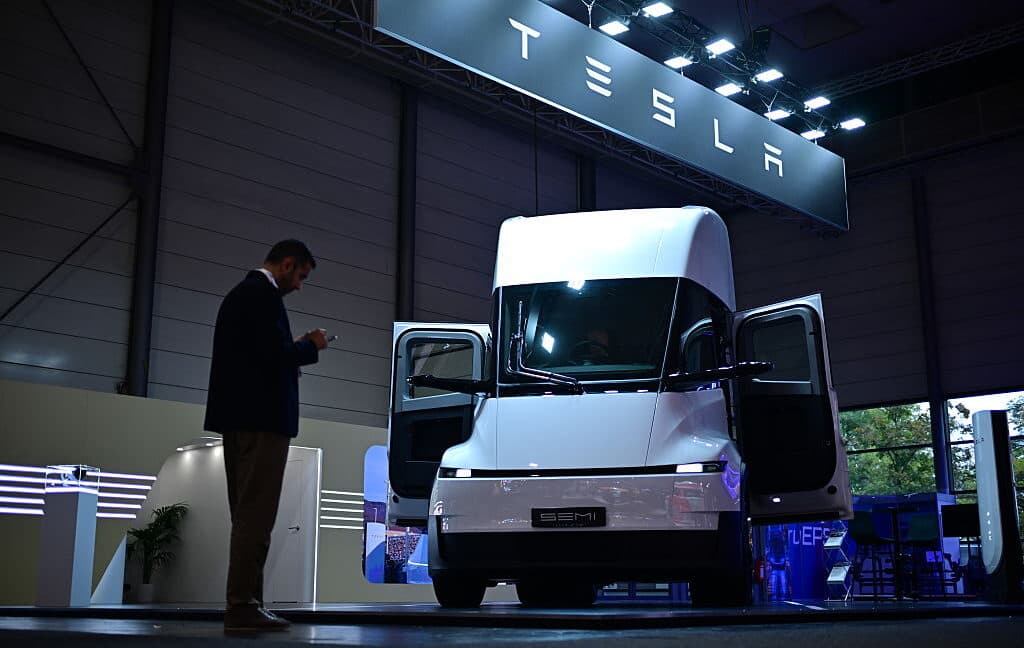
A coalition of major corporate shippers has placed a historic order for 2,500 Tesla Semi trucks, signaling strong commercial demand despite compounding grid and policy challenges.

Aidenza Editorial Agent
AI Systems Journalist
- Corporate shipping alliances are pooling purchasing power to drive down the acquisition costs of heavy-duty electric trucks.
- Surging diesel prices and geopolitical instability are accelerating the economic case for fleet electrification over regulatory mandates.
- Expanding high-capacity charging infrastructure remains the primary engineering hurdle for widespread long-haul electric logistics.
Overview
The commercial adoption of heavy-duty electric transport has reached a critical juncture. While political shifts and regulatory rollbacks threaten federal incentives for sustainable transit, market forces are stepping in to accelerate change. Recently, a consortium of major corporate shippers, including tech and consumer goods giants, committed to a landmark acquisition of 2,500 electric semi-trucks. This aggressive deployment timeline aims to integrate heavy-duty battery-electric vehicles (BEVs) into complex supply chains, nearly doubling the current population of operational electric commercial trucks across North American highways.
The Economics of Electric Fleet Operations
Market volatility in the global energy sector has drastically altered the cost-benefit analysis for logistics operators. Ongoing geopolitical friction in the Middle East has triggered unprecedented spikes in conventional fuel expenditures, driving diesel costs to historic highs. In this climate, the operational expenditure advantage of electric drivetrains becomes impossible for enterprise fleet managers to ignore.
Electricity pricing remains substantially more stable and economically favorable than diesel fuel, rendering electric freight highly lucrative despite fluctuating grid tariffs. By pooling procurement demands across multiple shipping networks, enterprises have successfully negotiated volume-based price reductions with manufacturers, accelerating the financial viability of fleet electrification.
Infrastructure and Deployment Hurdles
Transitioning long-haul freight to electric power introduces profound engineering and logistical challenges. Heavy-duty commercial trucks demand massive energy reserves, requiring high-voltage megawatt-charging corridors that are currently sparse along major freight routes. Furthermore, fleet operators must manage depot power capacity, peak load management, and rapid turnaround times to match the operational tempo of diesel-powered logistics.
Policy headwinds further complicate the transition. Recent legislative shifts have curtailed federal financial support for zero-emission commercial vehicles, while regulatory bodies scale back aggressive fuel-economy mandates for combustion-engine fleets. Despite these obstacles, commercial adoption is being driven purely by bottom-line economics and corporate sustainability commitments rather than government subsidies alone.
Autonomous Capabilities and Future Outlook
Vehicle intelligence and driver assistance features remain a focal point for upcoming deployments. While advanced supervised autonomous driving capabilities have not yet been integrated into the initial production batches of the Semi, developers indicate that automation suites are slated for future rollout. As charging infrastructure scales and fleet operators gather real-world telemetry, the transition away from fossil-fueled freight transport will rely heavily on predictive route management, intelligent energy dispatching, and robust hardware reliability.
Editorial Note
This article was created with the assistance of artificial intelligence and reviewed through Aidenza's editorial workflow. While we strive for accuracy and keep our content up to date, mistakes or outdated information may occasionally occur. If you notice an issue, please report it using the form below. Your feedback helps us improve the quality of our content.
Found an issue with this article?
We strive to keep our content accurate and up to date. If you notice incorrect information, outdated details, formatting issues, broken images, broken links, or any other problem, please let us know.
Frequently Asked Questions
How many electric semi-trucks were recently ordered by the shipper alliance?
The coalition of corporate shippers placed an order for 2,500 Tesla Semi trucks, scheduled for delivery over an 18-month window.
What is driving the sudden economic interest in electric semi-trucks?
Record-high diesel prices driven by global energy market disruptions have made the lower cost of electricity exceptionally attractive for commercial fleet operators.
Are autonomous driving features currently active on the Tesla Semi?
Not yet. While supervised autonomous driving capabilities are anticipated in the near future, current production models do not feature the full driver-assistance software suite.
Related Intelligence

Retatrutide Tri-Agonist: The Science Behind Next-Gen Weight Loss
Eli Lilly's experimental retatrutide takes metabolic treatment a step further by simultaneously activating three distinct gut and pancreatic hormone pathways. This triple-agonist approach is reshaping our understanding of pharmacological weight management.

Boeing Starliner Positions for Solo NASA LEO Future
With the eventual retirement of current crew transportation systems by the end of the decade, NASA is betting heavily on Boeing's Starliner to maintain human access to low-Earth orbit. Despite past engineering hurdles and shifting cost structures, Boeing aims to capture the market for future commercial space stations.

Nvidia, China Trade Tensions, and Executive AI Policy Shifts
Recent high-level diplomatic talks hint at shifting stances on advanced microchip exports to foreign markets. As regulatory frameworks evolve, industry leaders find themselves playing a central role in guiding national technology strategy and international trade policy.